- Introduction
- Why Visit Huancayo?
- Best Areas to Stay in Huancayo
- How Much Does It Cost to Stay in Huancayo?
- Best Things to Do in Huancayo
- Best Day Trips from Huancayo
- How to Get to Huancayo
- Getting Around Huancayo
- Practical Travel Tips for Huancayo
- Who Will Enjoy Huancayo Most?
- Final Thoughts: Is Huancayo the Right Place for You?
Introduction
Huancayo is a good choice for travelers who want to see a different side of Peru. While most visitors follow the destinations included in my Peru travel guide, such as Lima, Cusco, Arequipa, and Lake Titicaca, Huancayo sits well outside the usual tourist route.
The city lies in Peru’s central highlands, close to the Mantaro Valley, farmland, markets, and small villages. It is busy, practical, and built around everyday life rather than tourism. You will find crowded streets, traditional restaurants, and very few foreign visitors.
Huancayo is also more affordable than Peru’s better-known destinations. Accommodation, food, and transport are generally cheaper, which makes the city especially suitable for backpackers and slow travelers who want to stay for more than a few days.
This Huancayo travel guide covers where to stay, how to get there, what to do in the city and surrounding area, what to eat, and what to expect from a destination that most international travelers skip.
Why Visit Huancayo?
Huancayo is easy to reach from Lima, making it a practical addition to a longer Peru itinerary.
It does not fit naturally into every short route, so compare it with my two-week Peru itinerary before deciding whether you have enough time.
The city gives you a closer look at everyday life in the central highlands. Tourism plays only a small role here, so most restaurants, markets, and public spaces are aimed at people who live in the area rather than foreign visitors.
Food is another strong reason to visit. Local dishes such as papa a la Huancaína and pachamanca are widely available, while traditional drinks like calientitos are also worth trying.
Huancayo is also a useful base for exploring the Mantaro Valley. You can visit nearby villages, natural attractions, and historic sites on day trips without moving between hotels.
The city itself does not have enough major sights to fill a full week. Its appeal comes from staying at a slower pace, eating well, observing everyday life, and using Huancayo as a base for the surrounding region.
An Affordable Place to Stay Longer
Huancayo is a good place to spend more than a few days without putting too much pressure on your budget. Accommodation, food, drinks, and transport generally cost less than in Lima, Cusco, or other popular destinations.
Apartments can be particularly good value when traveling as a couple or group, while eating out and taking taxis remains affordable for most budget travelers.
This makes Huancayo suitable for backpackers and slow travelers who want to stay in one place for a while instead of moving on every few days.
A Good Base for Exploring Central Peru
Huancayo gives you easy access to several places across the wider region, making it possible to take day trips without changing accommodation.
Torre Torre is one of the closest options, with unusual rock formations in the hills just outside the city. For a longer trip into the mountains, Huaytapallana offers a very different experience at a much higher altitude.
Closer cultural and historical stops include the Huarivilca archaeological site, which is linked to the region’s pre-Inca past. Ingenio is another popular stop in the Mantaro Valley, known for its trout farms and restaurants.
These places can be visited separately or combined into longer day trips, depending on how much time you have and whether you travel by colectivo, taxi, or organised tour.
Best Areas to Stay in Huancayo
Huancayo City Center
From my experience, the city center is the safest and most practical area to stay in Huancayo. It has the largest concentration of restaurants, bars, shops, and everyday services, so you can reach most places without relying on transport.
Taxis are also easy to find, which is useful when returning in the evening or leaving early for a day trip. This makes the center a good choice for a first visit, especially when you are still getting used to the layout of the city.
It also works well for longer stays. Markets, cafés, restaurants, and other daily essentials are nearby, so you do not need to travel across Huancayo for simple errands.
Around Plaza de la Constitución
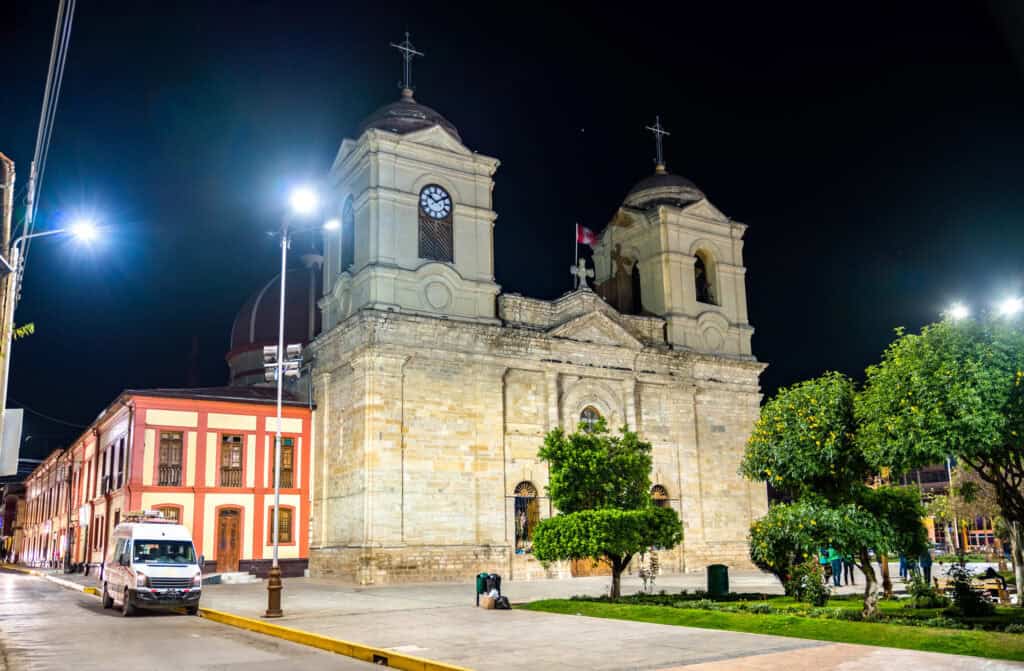
Staying near Plaza de la Constitución puts you right in the heart of Huancayo. The main square is surrounded by restaurants, shops, and the cathedral, so it is one of the most convenient places to stay if you want everything close by.
The area becomes especially lively during public holidays and local events, when parades pass through the square and temporary stalls sell food and other products.
Accommodation around the plaza is usually more expensive than in other parts of the city. Even so, prices are still generally lower than what you would pay for a similarly central location in Lima or Cusco.
How Much Does It Cost to Stay in Huancayo?
Accommodation Costs
Accommodation in Huancayo is generally affordable, although prices vary depending on the type of property and its location.
A standard hotel room usually costs around S/58 to S/233 per night (€15–€60 / about $17–$68). Private apartments on Airbnb often fall between S/97 and S/136 per night (€25–€35 / about $29–$40).
For longer stays, an apartment can offer better value, especially if you want more space, a kitchen, or are sharing the cost with someone else.
Prices are approximate and may change depending on the season, availability, and exchange rate.
Food and Restaurant Prices
Eating out in Huancayo is affordable, especially if you choose local lunch menus and simple restaurants. Cooking for yourself can also keep costs low, with markets and supermarkets selling basic groceries at reasonable prices.
Restaurant Prices
Menú del día: S/8–S/16 (€2–€4 / about $2.35–$4.70)
This usually includes a starter, a main course, and a drink. These set lunches are common at traditional restaurants around the center.
Simple restaurant meal: S/10–S/20 (€2.50–€5 / about $2.95–$5.90)
This covers basic dishes such as pollo a la brasa with fries or other everyday meals.
Mid-range dinner: S/40–S/60 per person (€10–€15 / about $11.75–$17.65)
This is closer to what you can expect at one of the better-known restaurants in the city.
Fast-food combo: S/16–S/24 (€4–€6 / about $4.70–$7.05)
Chain restaurants and food courts in shopping centers such as Open Plaza usually fall within this range.
Drink Prices
Cappuccino: around S/9 (€2.20 / about $2.65) at modern cafés around the city center.
Local beer: around S/4.60 (€1.15 / about $1.35) for a 0.5-liter bottle at a café or simple bar.
Soda: around S/2.50 (€0.60 / about $0.75) for a 0.5-liter bottle.
Grocery Prices
For travelers staying in an apartment with a kitchen, rough supermarket and market prices include:
- Potatoes, 1 kg: around S/2.60
- Eggs, 12: around S/8
- Chicken breast, 1 kg: around S/14
- Milk, 1 liter: around S/4.20
Prices are approximate and may vary between markets, supermarkets, and restaurants.
Transport and Daily Expenses
Transport in Huancayo is very affordable, both within the city and for short trips into the Mantaro Valley.
Getting Around the City
Combi or colectivo: S/1–S/1.50 per ride (€0.25–€0.40 / about $0.30–$0.45)
These shared vehicles follow fixed routes through the city. You normally pay when getting out.
Taxi within the center: S/5–S/8 (€1.25–€2 / about $1.45–$2.35)
Taxis do not use meters, so agree on the fare before getting in.
Taxi between the center and outer districts: S/8–S/14 (€2–€3.50 / about $2.35–$4.10)
The final price depends on the distance, traffic, and time of day.
Getting Outside the City
Colectivos connect Huancayo with nearby places such as Jauja, Concepción, Cochas Chico, and Cochas Grande.
Shared colectivo to nearby towns: S/4–S/10 per person (€1–€2.50 / about $1.20–$2.95)
Bus to Lima: S/40–S/100 one way (€10–€25 / about $11.75–$29.40)
Prices depend on the bus company, departure time, and seat type. The journey usually takes around seven to nine hours.
Other Daily Expenses
Bottled water, 1.5 liters: around S/2.50 (€0.65 / about $0.75)
Museum or archaeological site entry: around S/5–S/15 (€1.25–€3.75 / about $1.45–$4.40)
SIM card with 30 days of data: around S/30–S/40 (€7.50–€10 / about $8.80–$11.75)
Some attractions are free, while others may ask for a small entrance fee or contribution. Prices are approximate and may change over time.
Best Things to Do in Huancayo
Explore the City Center
Huancayo’s center is busy and often crowded, with shops, traffic, street vendors, and people moving between work, markets, and restaurants. It does not have the preserved historic streets of Cusco or Arequipa, but it is still worth spending a few hours here to understand the rhythm of the city.
Start at Plaza de la Constitución, Huancayo’s main square. It is surrounded by shops, restaurants, government buildings, and the Catedral de Huancayo. The plaza is a good place to sit for a while and watch the activity around you.
From there, walk through the nearby streets and continue along Calle Real, one of the main roads through central Huancayo. You will pass bakeries, cafés, banks, clothing stores, restaurants, and street stalls.
The center becomes especially lively during public holidays and local events, when parades pass through the plaza and temporary food stalls appear around the square.
You do not need a full day for this. A few hours is enough, especially when combined with lunch or a visit to one of Huancayo’s markets.
See the Torre Torre Rock Formations
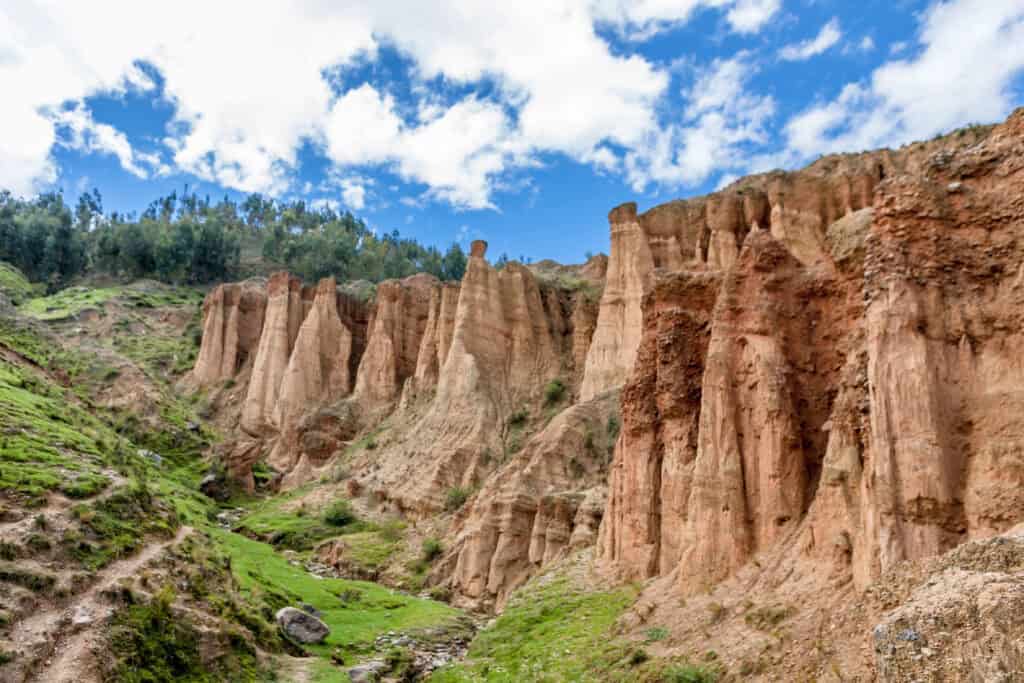
Torre Torre is one of the easiest places to visit just outside Huancayo. The tall, narrow formations rise from the hills above the city and were shaped over time by wind and rain.
A taxi from the center usually takes around 15 minutes, depending on traffic, so you do not need to book a full-day tour. Once you arrive, you can follow the paths between the formations and walk higher up the hillside for views over Huancayo and the Mantaro Valley.
The area is fairly small, and one to two hours is usually enough. Some sections are steep and uneven, so wear shoes with decent grip and avoid getting too close to loose edges.
Torre Torre works well as a short morning or afternoon trip, especially when you do not have time for one of the longer day trips outside the city.
Visit Huancayo’s Local Markets
Huancayo’s markets are some of the best places to see everyday life in the city. They are busy, noisy, and filled with stalls selling fruit, meat, bread, clothing, household goods, and prepared food.
You will find larger indoor markets near the center, along with smaller street markets in different neighborhoods. Many residents shop here instead of using supermarkets, so prices are usually low and the setting feels far removed from the more modern shopping centers.
The food sections are especially interesting. Stalls sell potatoes, corn, herbs, cheese, fruit, and other products from the Mantaro Valley. You can also find simple meals, fresh juices, snacks, and regional dishes for less than you would normally pay in a restaurant.
Markets are also useful if you are staying in an apartment and want to buy ingredients, small regional products, or handmade items.
Go in the morning, when most stalls are open and the markets are at their busiest. Keep an eye on your belongings in crowded areas, carry small notes and coins, and do not expect every vendor to accept cards.
Best Day Trips from Huancayo
Explore the Mantaro Valley
The Mantaro Valley is one of the main reasons to spend more than a day or two in Huancayo. The region is filled with small towns, farmland, workshops, and places where you can learn more about life in Peru’s central highlands.
Popular stops include Concepción, Jauja, Ingenio, and the craft villages of Cochas Chico and Cochas Grande. Each offers something different, from regional food and local history to handmade products and quieter streets away from Huancayo.
Cochas Chico and Cochas Grande are best known for mates burilados, dried gourds carved with detailed scenes. Small workshops in the villages show how they are made and sell finished pieces.
Concepción is another easy stop, while Ingenio is known for its trout farms and restaurants. Jauja has a slower pace and works well as part of a longer route through the northern part of the valley.
You can travel by colectivo, taxi, or organised tour. Public transport is the cheapest option, but a taxi or tour makes it easier to combine several stops in one day.
A full day is usually enough for two or three places without rushing. Start early, bring cash, and allow extra time for traffic and changing road conditions.
Spend a Day at Laguna de Paca
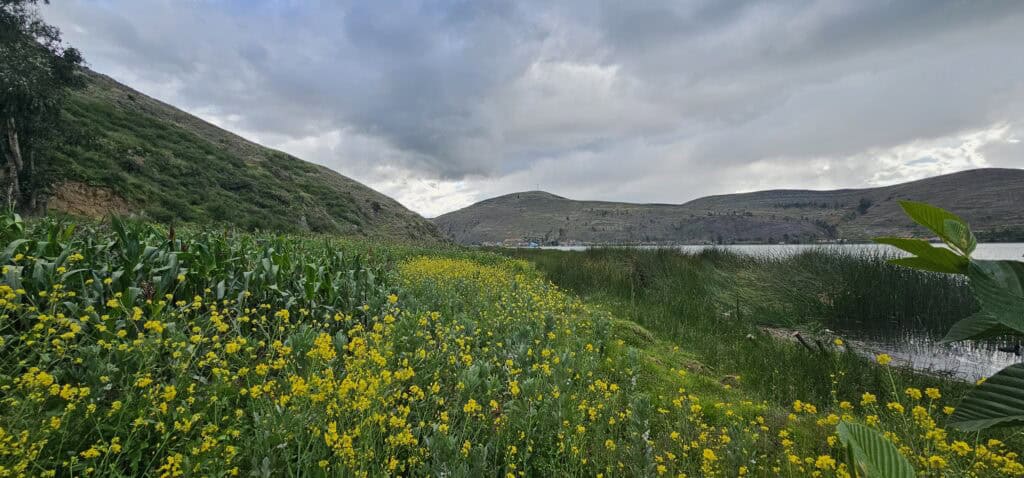
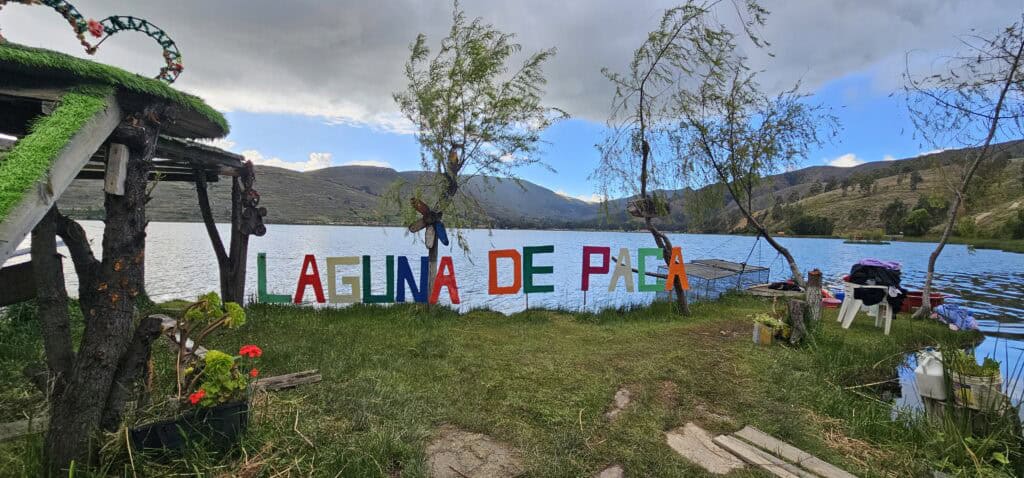
Laguna de Paca is a quiet lake near Jauja, around an hour from Huancayo. It makes an easy day trip when you want to get away from the traffic and spend a few hours somewhere slower.
The shore is lined with small restaurants and businesses, with farmland and hills around the lake. You can walk beside the water, take photos, or join a short boat ride. Some boat trips also include local stories connected to the lake.
You will often see ducks and other waterbirds near the reeds. Several restaurants serve trout and other regional dishes, so the lake is also a good place to stop for lunch. Check the menu before choosing a restaurant, as prices and quality can vary.
To visit independently, take a colectivo or bus from Huancayo to Jauja, then continue by taxi or mototaxi. A direct taxi from Huancayo is easier when traveling with others, but it will cost more.
Laguna de Paca can be visited on its own or combined with Jauja and other stops in the northern Mantaro Valley. Allow at least half a day, or stay longer if you want a slower day by the lake.
Traditional Food to Try in Huancayo
Pachamanca
Pachamanca is one of the most traditional dishes in Huancayo and the wider Mantaro Valley. It is prepared by cooking meat, potatoes, corn, and other ingredients underground with heated stones.
The meat is usually marinated with herbs and spices before being placed in the earth oven. Depending on the recipe, the dish may include pork, chicken, lamb, or a combination of meats.
It is a large and filling meal, so lunch is usually the best time to try it. A typical plate may also include several types of potatoes, corn, beans, and fresh cheese.
Pachamanca is often prepared for family gatherings and special occasions, but some traditional restaurants around Huancayo serve it during the week. Availability can vary, so it is worth checking before going.
For the most traditional version, look for restaurants outside the busiest streets of the center, where pachamanca is more likely to be prepared in larger portions and cooked using the traditional method.
Papa a la Huancaína
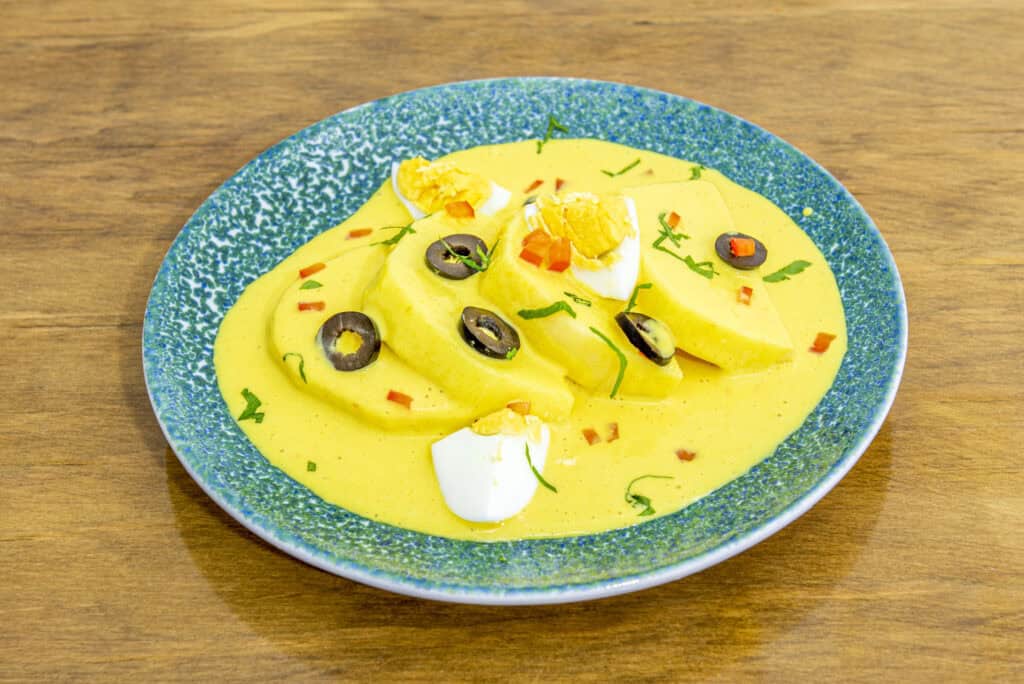
Papa a la Huancaína is one of Peru’s best-known dishes and has a strong connection to Huancayo and the central highlands. It consists of boiled potatoes covered in a creamy yellow sauce made with ají amarillo, fresh cheese, milk, and crackers.
The dish is usually served cold with lettuce, black olives, and slices of boiled egg. The sauce is rich and slightly spicy, although the level of heat can vary between restaurants.
You will find papa a la Huancaína on menus across the city, from simple lunch spots to more modern restaurants. It is normally served as a starter, but larger portions can also work as a light meal.
It is often included in a menú del día, making it one of the easiest local dishes to try during your stay.
Trucha
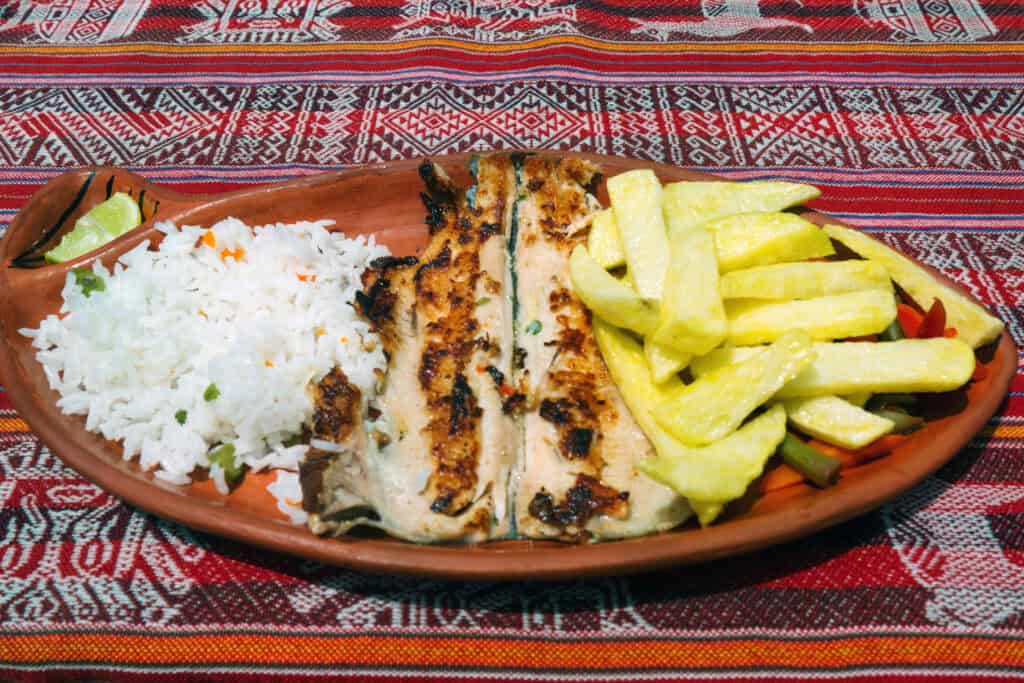
Trucha, or trout, is widely eaten in Huancayo and across the Mantaro Valley. Much of it comes from fish farms in the region, especially around Ingenio.
It is usually served grilled or fried with potatoes, rice, salad, or corn. Some restaurants also prepare it with garlic, butter, or a simple sauce.
Ingenio is one of the best places to try it, particularly at restaurants near the trout farms. These make an easy lunch stop during a day trip through the valley.
Trout is generally affordable, although restaurants aimed at day-trippers may charge more. Check the menu before ordering, especially when the fish is priced by weight.
How to Get to Huancayo
How to Get from Lima to Huancayo by Bus
Taking the bus is the easiest and most common way to travel from Lima to Huancayo. Several long-distance companies operate the route, with both daytime and overnight departures.
Most travelers begin this journey in the capital. My Lima travel guide covers where to stay and what to do before continuing to Huancayo.
The journey normally takes around seven to nine hours, although traffic leaving Lima and conditions on the mountain roads can make it longer. The road climbs from the coast into the central Andes, so expect plenty of bends and a noticeable increase in altitude.
Tickets usually cost between S/40 and S/100, depending on the company, departure time, and seat type. More comfortable services may include reclining seats, air conditioning, toilets, and a small snack.
Cruz del Sur and Movil Bus are among the companies that serve the route. Check the departure terminal before booking, as operators leave from different parts of Lima.
An overnight bus saves time and the cost of one night’s accommodation, but sleeping can be difficult if you are sensitive to winding roads. A daytime service takes up most of the day, although you can watch the scenery change as the bus climbs into the highlands.
Book ahead around public holidays and busy weekends. Most buses arrive at terminals in or near central Huancayo, where you can continue to your accommodation by taxi.
For more information about operators, seat types, terminals, and booking tickets, read my complete guide to traveling Peru by bus.
How to Get from Lima to Huancayo by Plane
Huancayo does not have its own commercial airport. The nearest option is Francisco Carlé Airport in Jauja, around one hour from Huancayo by road.
Direct flights from Lima to Jauja take about one hour, although schedules are limited and can change. Check current routes before booking rather than relying on fixed departure days.
After landing in Jauja, you still need to continue to Huancayo. Taxis and shared transfers are usually available near the airport, and the drive normally takes around one to one and a half hours, depending on traffic.
Flying is much faster than taking the bus, but the total journey takes longer than the flight itself. You also need to include travel to Lima Airport, check-in time, baggage collection, and the transfer from Jauja to Huancayo.
This option is usually more expensive than the bus, especially when booked at short notice. It can still be useful when your time is limited or you want to avoid the long drive through the Andes.
Before booking, compare the full cost of the flight and airport transfer. Leave some flexibility in your plans as well, since flights to smaller high-altitude airports can be affected by weather conditions.
Getting to Huancayo from Other Parts of Peru
Reaching Huancayo from elsewhere in Peru is possible, but direct connections are more limited than they are from Lima. In many cases, the simplest route is to travel through the capital and continue by bus or plane.
From other parts of central Peru, buses and colectivos connect Huancayo with places such as Jauja, Tarma, La Merced, Ayacucho, and Cerro de Pasco. Journey times can be longer than expected because many routes follow mountain roads.
Direct buses from Cusco, Arequipa, Puno, and northern Peru may be available, but departures are often less frequent and travel times can be very long. Traveling through Lima usually gives you more choice and makes the journey easier to plan.
For less common routes, check the departure terminal in advance and buy your ticket at least a day before traveling, especially around weekends and public holidays.
Getting Around Huancayo
Walking Around the City Center
Walking is the easiest way to get around central Huancayo. Most restaurants, shops, markets, and main squares are close enough to reach on foot, especially if you stay near Plaza de la Constitución.
Calle Real is one of the main streets through the center and is a useful reference point when finding your way around. From there, you can easily reach the main square, nearby shopping streets, restaurants, and several markets.
The center can feel crowded, with narrow pavements, street vendors, and heavy traffic. Drivers do not always stop for pedestrians, so take extra care when crossing busy roads.
Because Huancayo sits at more than 3,200 metres (about 10,500 feet) above sea level, walking may feel more tiring during your first few days. Take your time and avoid planning too much on your first day if you are not yet used to the altitude.
Walking is usually fine during the daytime. At night, it is better to take a taxi for longer distances or when returning to accommodation outside the busiest central streets.
Using Taxis
Taxis are one of the easiest ways to get around Huancayo, especially for trips outside the center or when returning to your accommodation at night.
Most taxis do not use meters, so agree on the fare before getting in. A short ride within the center usually costs around S/5 to S/8, while trips to areas such as El Tambo or Chilca may cost more depending on traffic and distance.
You can usually find taxis around Plaza de la Constitución, shopping areas, and bus terminals. Hotels and restaurants can also arrange one for you.
For longer trips, such as Torre Torre or nearby villages, agree on the full price in advance. Hiring a driver for a few hours can also be useful when visiting several places in one day.
Carry small notes, as drivers may not always have change. At night, use a taxi arranged by your accommodation or a trusted local service.
Getting to Places Outside the City
For places outside central Huancayo, colectivos, minibuses, and taxis are the main transport options. Public transport is very cheap, although routes and departure points are not always clearly marked.
Colectivos are shared cars or vans that follow fixed routes to nearby towns and villages. They are useful for reaching Jauja, Concepción, Ingenio, and other parts of the Mantaro Valley. Vehicles often leave once enough passengers have arrived.
Minibuses are another low-cost option. They connect Huancayo with surrounding districts and smaller towns, although journeys can be slower because they make frequent stops.
For places without a direct route, taking a taxi is usually easier. You can arrange a one-way fare, ask the driver to wait, or agree on a return pickup time.
Hiring a taxi for a few hours can also save time when visiting several places in one day. It costs more than public transport, but makes it easier to combine different stops without worrying about connections.
Bring cash and small notes, and ask your accommodation where the correct colectivo or minibus leaves from. Departure points can change and are not always easy to find online.
Practical Travel Tips for Huancayo
Huancayo is generally straightforward to visit, but a little preparation will make your stay easier. The city receives far fewer international tourists than Lima or Cusco, so English is less widely spoken and tourist services are more limited.
Bring enough cash for daily expenses. Larger hotels, supermarkets, and modern restaurants may accept cards, but local markets, taxis, colectivos, small restaurants, and craft workshops usually prefer cash. Keep small notes and coins available, as drivers and vendors may struggle to change larger bills.
Huancayo sits at more than 3,200 metres above sea level. Take it easy during your first day, drink plenty of water, and avoid heavy meals or alcohol until you know how your body reacts to the altitude.
Days can feel warm in direct sunlight, but temperatures often drop quickly in the evening. Bring layers, a light waterproof jacket, sunscreen, and comfortable shoes, especially when visiting villages or attractions outside the city.
Basic Spanish is very useful in Huancayo. Taxi drivers, market vendors, and colectivo drivers may not speak English, so downloading an offline translation app and saving the address of your accommodation can help.
Traffic in the center can be busy and pavements are sometimes uneven. Be careful when crossing roads, as drivers do not always give pedestrians priority.
Huancayo is not dangerous by Peruvian city standards, but normal precautions still apply. Keep valuables out of sight in crowded markets, avoid walking through unfamiliar areas late at night, and use a taxi when returning to your accommodation after dark.
It is also worth leaving some flexibility in your plans. Public transport schedules are not always clear, mountain weather can change quickly, and journeys through the Mantaro Valley may take longer than expected.
Who Will Enjoy Huancayo Most?
Huancayo is best suited to travelers who want to experience a part of Peru that receives relatively few international visitors.
Backpackers and long-term travelers will appreciate the affordable accommodation, food, and transport. The city is also a good fit for people who enjoy markets, regional food, traditional crafts, and day trips to smaller towns and villages.
Huancayo works particularly well for slow travelers who do not need a long list of attractions every day. You can spend time in the city, settle into a routine, and use it as a base for exploring the Mantaro Valley.
It is less suitable for travelers looking for a large hostel scene, international nightlife, luxury hotels, or a polished historic center. First-time visitors with only one or two weeks in Peru may also prefer to prioritize destinations such as Cusco, Machu Picchu, Arequipa, and Lake Titicaca.
Huancayo is most rewarding when you have extra time and are more interested in everyday life than famous landmarks.
Final Thoughts: Is Huancayo the Right Place for You?
Huancayo will not be the highlight of every Peru itinerary, but that is part of its appeal.
The city does not have the famous landmarks or preserved historic center found in places like Cusco or Arequipa. What it does have is affordable food, busy markets, regional dishes, nearby villages, and easy access to the Mantaro Valley.
Huancayo is a good choice for travelers who want to slow down and see a part of Peru that most international visitors miss. It suits backpackers, long-term travelers, and anyone more interested in everyday life than in ticking off major attractions.
It is less suitable if your time in Peru is limited or if you want a destination with a long list of famous sights.
For travelers with extra time, Huancayo can be a rewarding stop. Stay for a few days, try the regional food, visit the surrounding valley, and experience the city at a slower pace.