- 1. Visit Machu Picchu
- 2. Explore Cusco
- 3. Hike the Inca Trail
- 4. Travel Through the Sacred Valley
- 5. Hike Rainbow Mountain
- 6. Go Sandboarding in Huacachina
- 7. Take a Boat Tour to the Ballestas Islands
- 8. Visit Paracas National Reserve
- 9. Walk Around Santa Catalina Monastery in Arequipa
- 10. Visit the Colca Canyon
- 11. Visit the Uros and Taquile Islands on Lake Titicaca
- 12. Try Peru’s Best Food in Lima
- 13. Explore Lima’s Historic Center
- Final Thoughts on the Best Things to Do in Peru
Peru offers much more than Machu Picchu. You can hike through former Inca routes, explore historic cities, visit islands on Lake Titicaca, see wildlife near Paracas and go sandboarding in Huacachina.
This list covers some of the best things to do in Peru, including famous attractions and a few experiences that are easy to combine in the same route. You do not need to include all of them in one trip. The best choices depend on how much time you have and which parts of the country you plan to visit.
For each activity, I explain why it is worth adding to your itinerary and include practical information to help with planning. Where available, you can also follow the links to my full destination guides for more detailed advice.
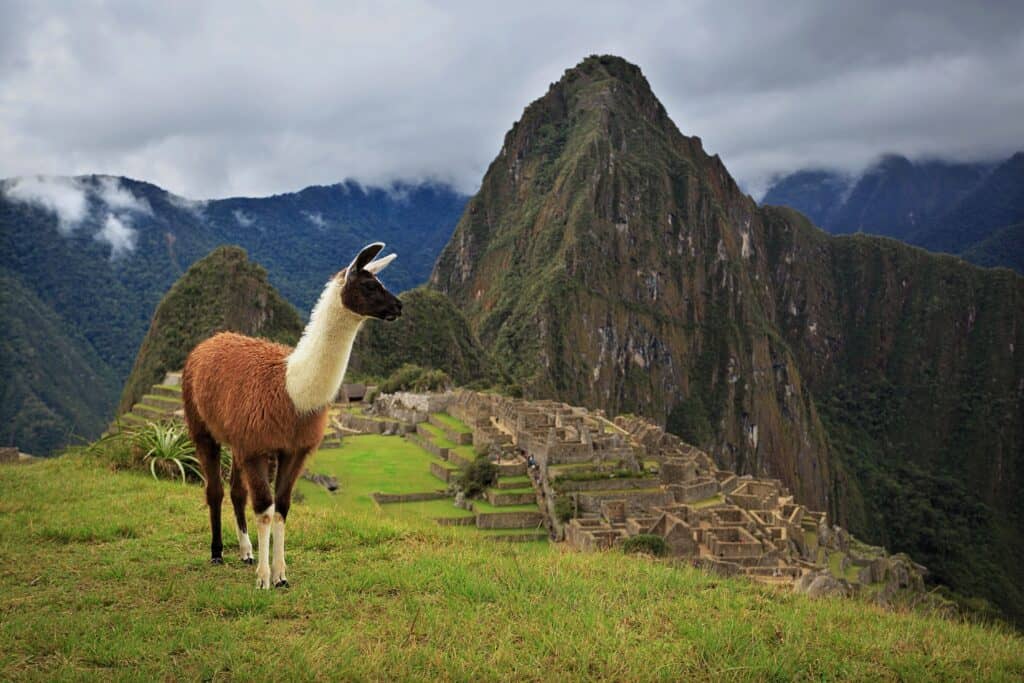
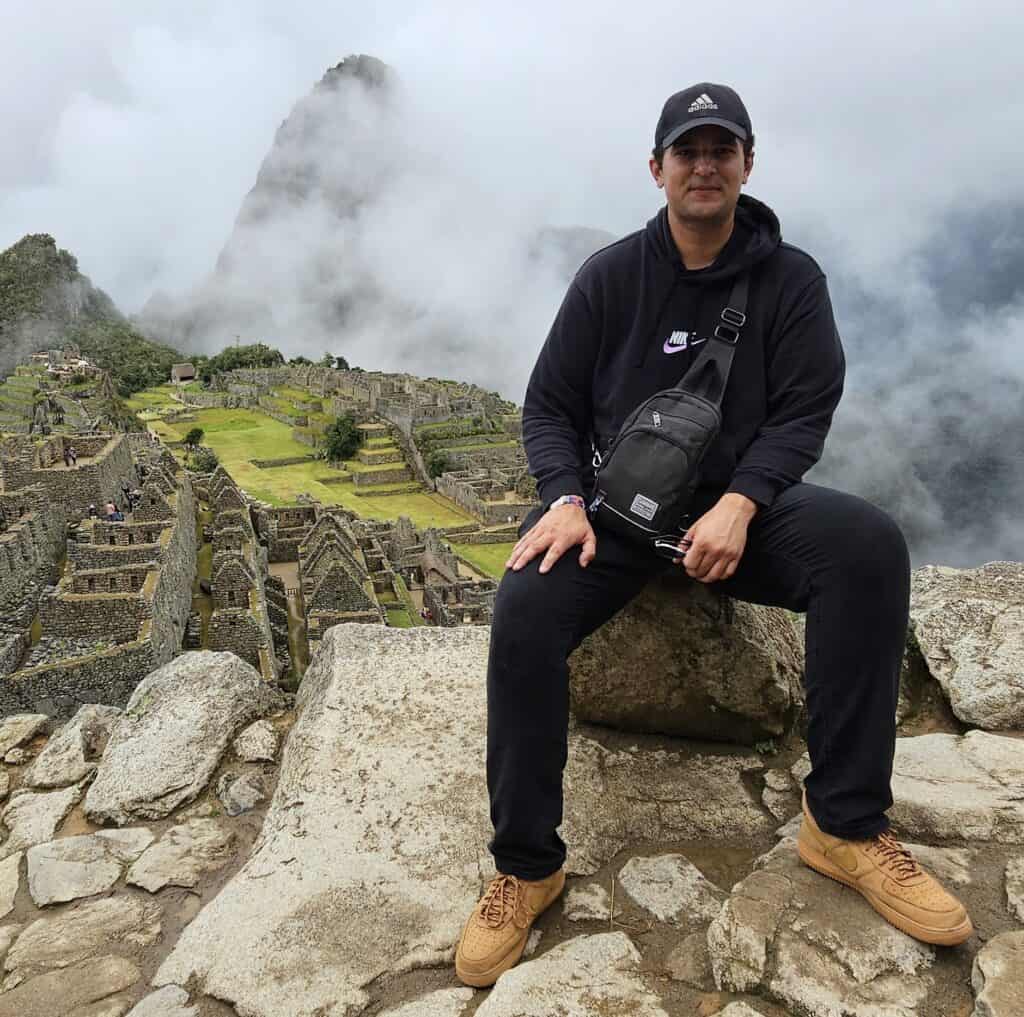
1. Visit Machu Picchu
Machu Picchu is Peru’s most famous attraction and one of the best-preserved remains of the Inca Empire. It was built during the 15th century, most likely under the rule of the Inca emperor Pachacuti.
Historians generally believe that Machu Picchu served as a royal estate rather than a normal city. Members of the emperor’s court may have stayed there alongside priests, servants, farmers and skilled workers who maintained the buildings, terraces and surrounding land.
The site includes homes, temples, agricultural terraces and stone buildings constructed without modern machinery. Many of the stones were shaped so precisely that they fit closely together without mortar. Seeing how much was built in such a difficult location is one of the main reasons Machu Picchu is worth visiting.
Machu Picchu also formed part of the much larger Inca road network. The Incas used trained messengers known as chasquis to carry news and instructions between different parts of the empire. They did not run the entire distance alone. Instead, they worked in relays, passing messages to another runner waiting farther along the route. This allowed information to travel surprisingly quickly between important places such as Cusco and other Inca settlements.
After the fall of the Inca Empire, Machu Picchu remained largely unknown outside the surrounding area for centuries. Local people knew the ruins existed, but the site only became internationally famous in 1911 after Hiram Bingham was guided there.
Most travelers now visit Machu Picchu from Cusco. The easiest option is to take a train to Aguas Calientes and continue to the entrance by bus. It is also possible to arrive on foot, with the Inca Trail being the most famous hiking route.
Machu Picchu tickets are divided into different circuits, which provide access to different viewpoints and sections of the ruins. Choosing the correct circuit is therefore an important part of planning your visit.
For more information about tickets, circuits, trains and the different ways to reach the site, read my complete Machu Picchu guide.
2. Explore Cusco
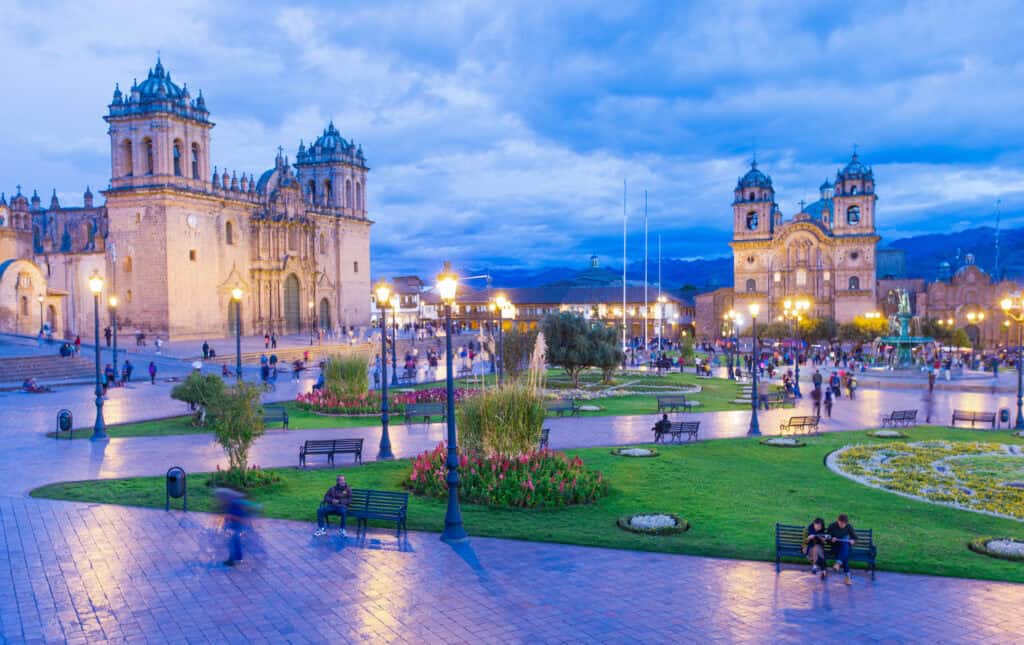
Cusco was once the political and religious centre of the Inca Empire. Under the rule of Pachacuti, the city developed into an important capital from which the Incas controlled a large part of western South America. Many roads through the empire connected back to Cusco, making it the heart of the Inca road network.
After the Spanish arrived in the 16th century, they built churches, homes and government buildings on top of existing Inca structures. You can still see this clearly throughout the city. Large Inca stone walls form the foundations of later colonial buildings, especially around the historic centre and Qorikancha. This combination of Inca and Spanish architecture is one of the main reasons Cusco feels different from other cities in Peru.
Cusco is also much more than a place to pass through on the way to Machu Picchu. The historic centre is easy to explore on foot, with Plaza de Armas, San Blas, San Pedro Market and Qorikancha all located relatively close together. Just outside the city, you can visit important Inca sites such as Sacsayhuamán.
The city is also the main base for visiting Machu Picchu, the Sacred Valley and Rainbow Mountain. Because there is so much to see nearby, I recommend staying for at least three full days. You will need longer if you also plan to take several day trips.
Cusco sits at around 3,400 meters (11,155 ft) above sea level, so it is best to keep your first day easy. Walk slowly, drink enough water and avoid planning a difficult hike immediately after arriving. Some travelers feel almost nothing, while others may experience headaches, tiredness or shortness of breath.
For more information about the historic centre, nearby ruins, restaurants, accommodation and how many days to stay, read my complete Cusco travel guide.
3. Hike the Inca Trail
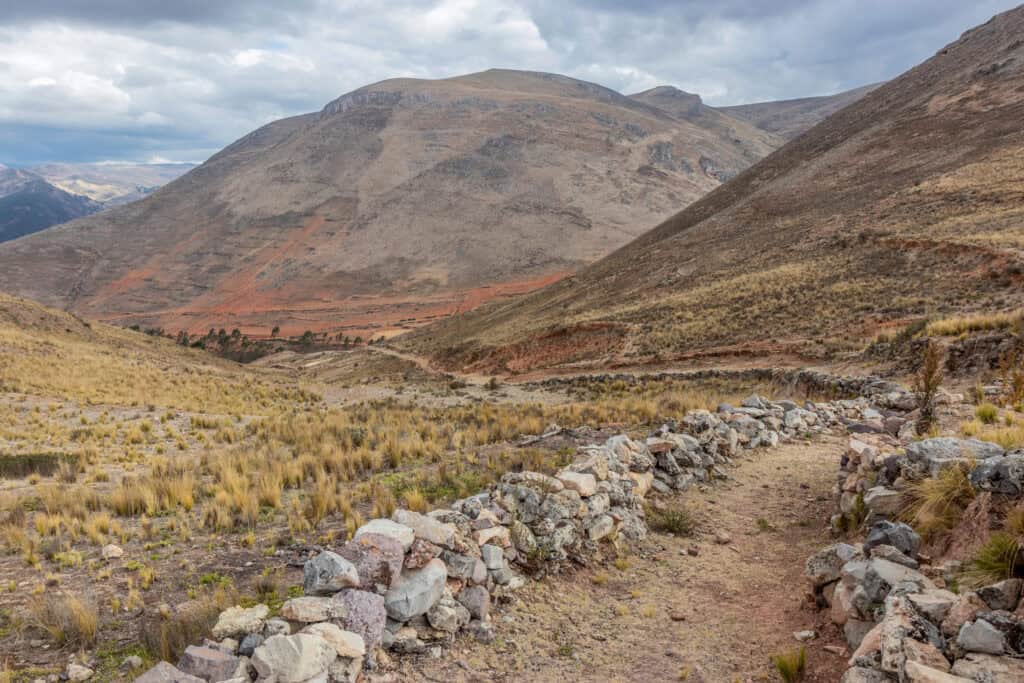
The Inca Trail is the most famous hiking route to Machu Picchu and follows part of the road system once used by the Incas. These roads connected cities, villages, temples and administrative centres across the empire, allowing people, goods and messages to move between different regions.
Along the route, you pass several Inca sites that cannot be reached by road. Some were likely used as resting points, religious places or small settlements for people travelling through the mountains. This makes the hike more than just a way to reach Machu Picchu. You see parts of the Inca network that most visitors miss when they travel by train.
The classic Inca Trail normally takes four days and ends at the Sun Gate, where hikers get their first view of Machu Picchu before entering the site. There is also a shorter two-day option for travelers who want part of the experience without completing the full trek.
The hike is physically demanding because of the altitude, long walking days and steep sections. Dead Woman’s Pass is the highest point on the classic route at around 4,200 meters (13,780 ft), so it helps to spend a few days in Cusco before starting. Good walking shoes, warm layers and rain protection are also important, as conditions can change quickly.
Access to the trail is limited, and travelers must book through an authorised tour operator. Permits can sell out months in advance, especially during the busiest part of the year, so this is not an activity to leave until the last moment.
The Inca Trail is best suited to travelers who want the journey to Machu Picchu to be part of the experience rather than simply taking the train. It is more expensive and requires more preparation, but it gives you several days of walking through Inca history before reaching the ruins.
4. Travel Through the Sacred Valley
The Sacred Valley was one of the most important areas of the Inca Empire. Its lower altitude, fertile land and access to water made it ideal for growing crops, especially maize. The valley also connected Cusco with Machu Picchu and several important Inca settlements.
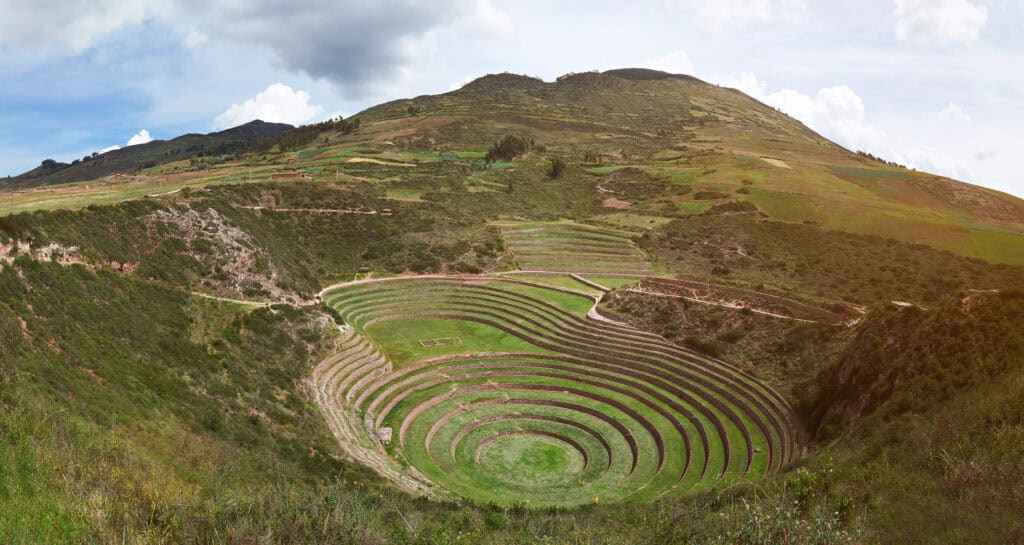
Today, the Sacred Valley is one of the best places in Peru to see how the Incas built towns, agricultural terraces and religious sites across an entire region. Places such as Pisac, Ollantaytambo, Moray and Maras each show a different part of Inca life. Pisac is known for its hillside ruins, Ollantaytambo for its large stone terraces and fortress, and Moray for its circular agricultural terraces.
The valley is also useful for travelers who want to adjust to the altitude before spending more time in Cusco. Many towns in the Sacred Valley sit lower than Cusco, which can make the first days of a trip more comfortable.
You can visit the Sacred Valley on a day tour from Cusco, but staying overnight gives you more time and makes the experience less rushed. Ollantaytambo is one of the best places to stay because it has direct train connections to Aguas Calientes and is easy to combine with Machu Picchu.
The Sacred Valley works especially well as part of a larger route through southern Peru. It can be visited before Machu Picchu, after Cusco, or as a base for exploring nearby sites at a slower pace.
For more information about Pisac, Ollantaytambo, Maras, Moray, transport and how many days to stay, read my complete Sacred Valley guide.
5. Hike Rainbow Mountain
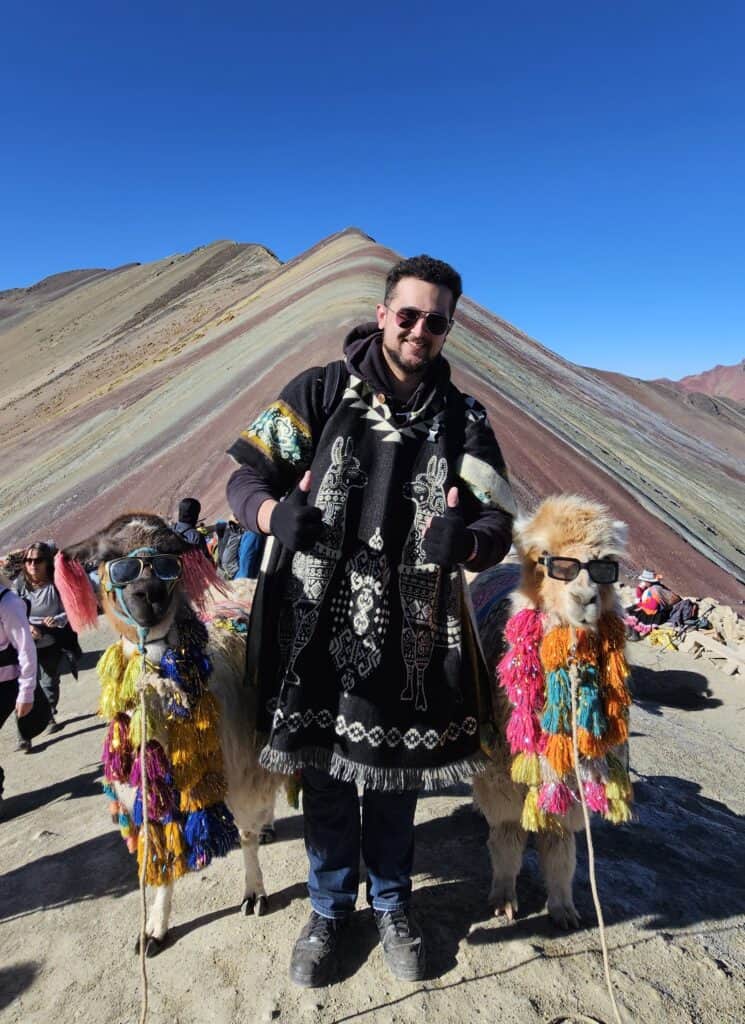
Rainbow Mountain, also known as Vinicunca, has become one of the most popular day trips from Cusco. Its coloured slopes were formed by different minerals in the ground, creating the red, yellow, green and brown layers that make the mountain so easy to recognize.
The mountain only became widely known to international travelers in recent years, after snow and ice covering parts of the area began to disappear. Since then, it has grown into one of Peru’s most photographed natural attractions.
Most tours leave Cusco very early in the morning and include a long drive before the hike begins. The walk itself is not extremely long, but the altitude makes it difficult. The viewpoint sits at more than 5,000 meters (16,400 ft) above sea level, so even a short uphill section can feel exhausting.
It is best to spend several days in Cusco or the Sacred Valley before attempting the hike. Warm clothing, rain protection, water and a steady pace are important. Horses are usually available for part of the route, but you will still need to walk the final section to the viewpoint.
Weather can change quickly, and cloud, rain or snow may affect how clearly you can see the colours. Starting early usually gives you a better chance of reaching the viewpoint before the largest crowds arrive.
For more information about the altitude, tour options, what to bring and whether Rainbow Mountain is worth visiting, read my complete Rainbow Mountain guide.
6. Go Sandboarding in Huacachina
Huacachina is a small desert oasis just outside the city of Ica. It developed around a natural lagoon and is now surrounded by hotels, restaurants and some of the largest sand dunes in the area.
The main reason to visit is the combination of dune buggy rides and sandboarding. Tours usually take you deep into the dunes, where drivers stop at several slopes so you can slide down on a board. Beginners often lie flat on the board, while more experienced visitors can try standing up.
The buggy ride is a large part of the experience. The drivers move quickly over the dunes, with steep climbs and sudden drops along the way. It feels more like an adventure ride than normal transport, so this activity may not be suitable for travelers with back problems or anyone who dislikes fast, rough rides.
Most tours leave in the late afternoon, when the temperature is lower. They often finish at a high point in the dunes, where you can watch the sunset before returning to Huacachina.
You can visit Huacachina on a day trip, but staying for one night makes the trip easier and gives you time to walk around the oasis. It is commonly combined with Paracas, as both places fit well into the route between Lima and southern Peru.
For more information about tours, transport, where to stay and how long to spend there, read my complete Huacachina guide.
7. Take a Boat Tour to the Ballestas Islands
The Ballestas Islands are a group of rocky islands off the coast of Paracas and one of the best places in Peru to see wildlife from the water. The islands are home to large numbers of seabirds, sea lions and Humboldt penguins, making the boat tour especially popular with travelers who want to see a different side of Peru.
Tours usually leave in the morning and take around two hours. Boats first pass the Paracas Candelabra, a large figure carved into the hillside, before continuing toward the islands. Visitors remain on the boat throughout the trip, as landing on the islands is not allowed.
Once you reach the Ballestas Islands, the boats move slowly around the rock formations so passengers can see the wildlife from different angles. Depending on the season and conditions, you may see pelicans, cormorants, boobies, sea lions and penguins. The number of animals can vary, but the islands are generally active throughout the year.
The boat ride can be cold and windy, even when Paracas itself feels warm. Bring a light jacket, sunscreen and something to protect your camera or phone from sea spray. Sitting near the side of the boat usually gives you a clearer view, but it also means you are more likely to get wet.
The Ballestas Islands are easy to combine with Paracas National Reserve on the same day. Most travelers take the boat tour in the morning and visit the reserve later in the afternoon.
For more information about tour prices, departure times, what wildlife you may see and how to plan your stay, read my complete Paracas guide.
8. Visit Paracas National Reserve
Paracas National Reserve protects a large part of the coast south of the town of Paracas. It was created to protect the sea, the land around it and the animals that live in the area.
The reserve is very different from the rest of Peru. Instead of mountains or busy cities, you drive through a quiet desert area that leads directly to the Pacific Ocean. Along the way, there are several viewpoints, beaches and places where you can stop to look out over the coast.
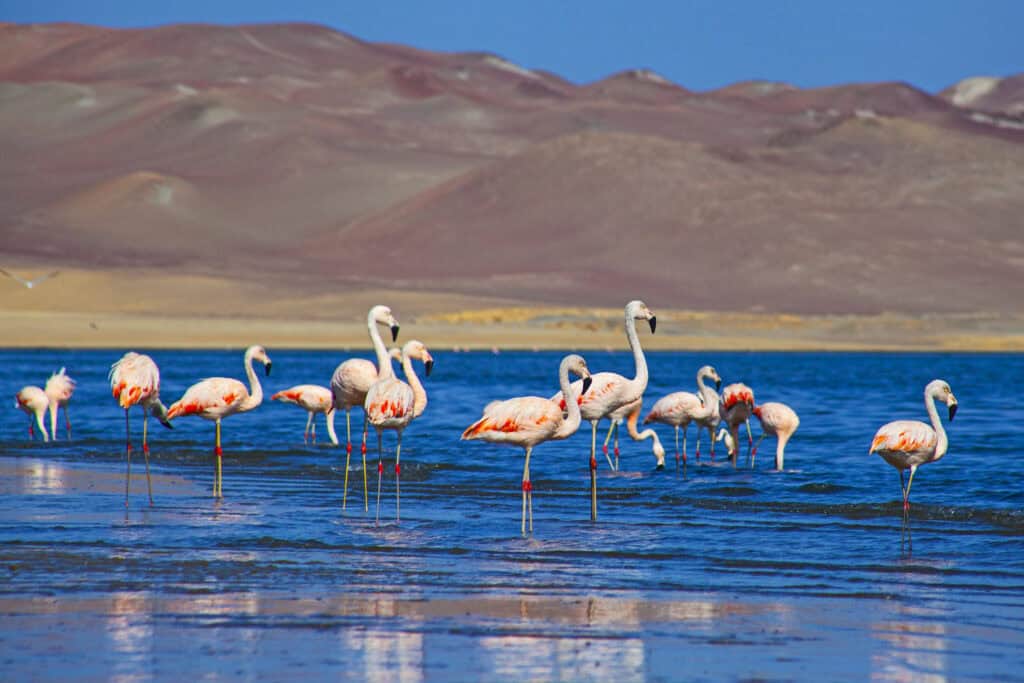
One of the best-known stops is Playa Roja, a beach with red-coloured sand caused by the rocks in the area. Other common stops include cliff viewpoints, small beaches and areas where you may see seabirds or flamingos.
You can visit the reserve with a tour, by taxi or with your own transport. A tour is the easiest option if you only have one day in Paracas. Visiting independently gives you more freedom, but you will need to arrange transport yourself.
Most travelers combine the reserve with a morning boat tour to the Ballestas Islands. This works well because the boat tour usually finishes before midday, leaving enough time to visit the reserve in the afternoon.
Bring sunscreen, water and a light jacket. There is little shade, and the wind can be strong even when the temperature feels warm.
9. Walk Around Santa Catalina Monastery in Arequipa
Santa Catalina Monastery is one of the most interesting places to visit in Arequipa. It was founded in the 16th century and was home to women who joined the religious community, many of them from wealthy Spanish families.
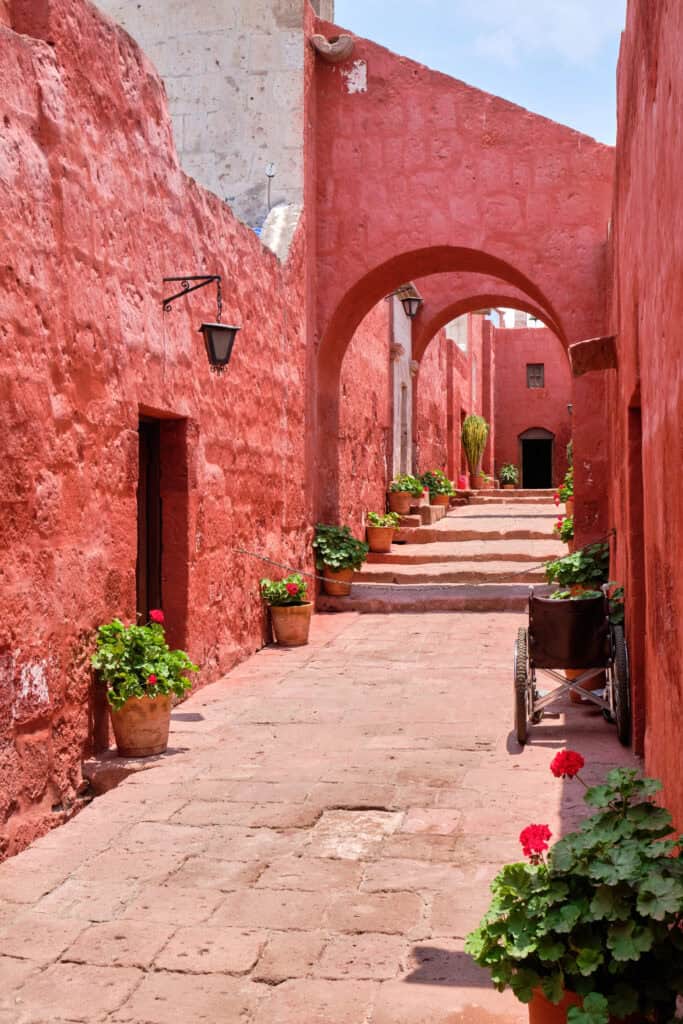
For a long time, the monastery was largely closed off from the city. The women who lived there had their own rooms, kitchens, courtyards and small streets inside the complex. Because of this, Santa Catalina feels more like a small neighbourhood than a single building.
Today, visitors can walk through the old living quarters, chapels, courtyards and narrow streets. Many of the walls are painted in strong red, blue and white colours, which makes the monastery easy to recognize in photos.
You should allow around two to three hours for a visit. It is possible to walk around independently, but a guide can help explain how the women lived and how the monastery changed over time.
Santa Catalina is located close to Arequipa’s main square, so it is easy to include while exploring the historic centre. Visiting earlier in the day can be more comfortable, especially when the city becomes busier later on.
For more information about Santa Catalina, the historic centre, where to stay and how many days to spend in Arequipa, read my complete Arequipa guide.
10. Visit the Colca Canyon
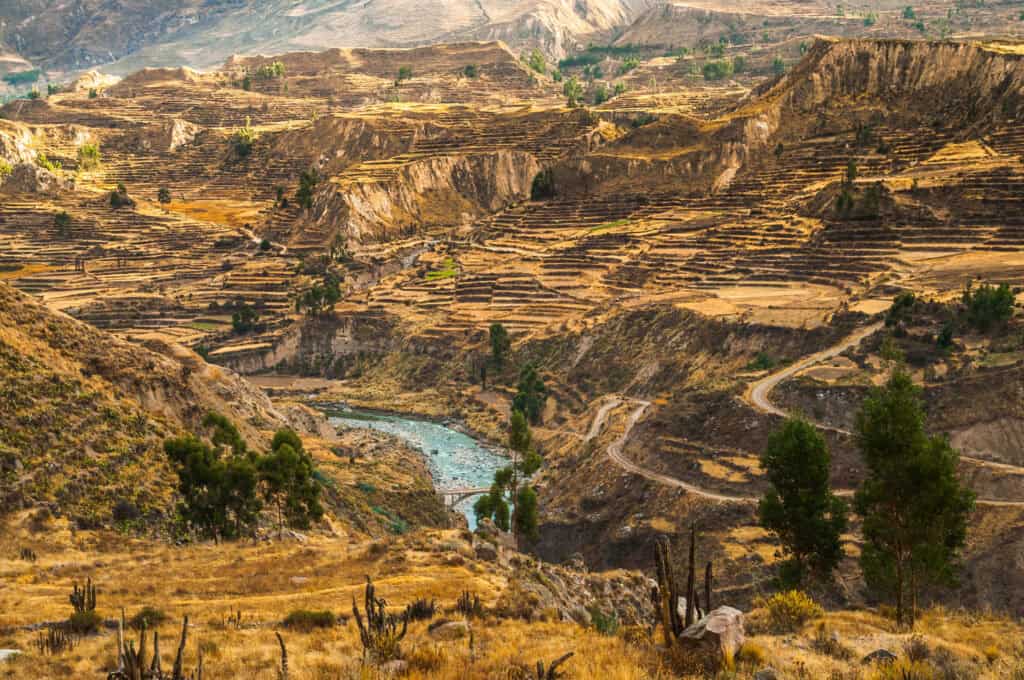
The Colca Canyon is one of the deepest canyons in the world and one of the most popular trips from Arequipa. The area has been inhabited for centuries, and you can still see agricultural terraces that were built long before the Spanish arrived.
One of the main reasons to visit is the chance to see Andean condors. These large birds often fly near the Cruz del Cóndor viewpoint in the morning, when rising air helps them move through the canyon. Seeing them from close distance is one of the highlights of the trip.
You can visit the Colca Canyon on a long day tour from Arequipa, but an overnight trip is usually better. The drive takes several hours, and staying overnight gives you more time to visit villages, viewpoints and hot springs without rushing.
Travelers who want a more active trip can also hike into the canyon. The routes can be steep, and the climb back up is difficult, especially at altitude. Most tours start very early, so it is important to rest well and bring warm clothing, water and sun protection.
11. Visit the Uros and Taquile Islands on Lake Titicaca
Lake Titicaca sits on the border between Peru and Bolivia and has been important to local communities for centuries. On the Peruvian side, two of the best-known places to visit are the Uros floating islands and Taquile Island.
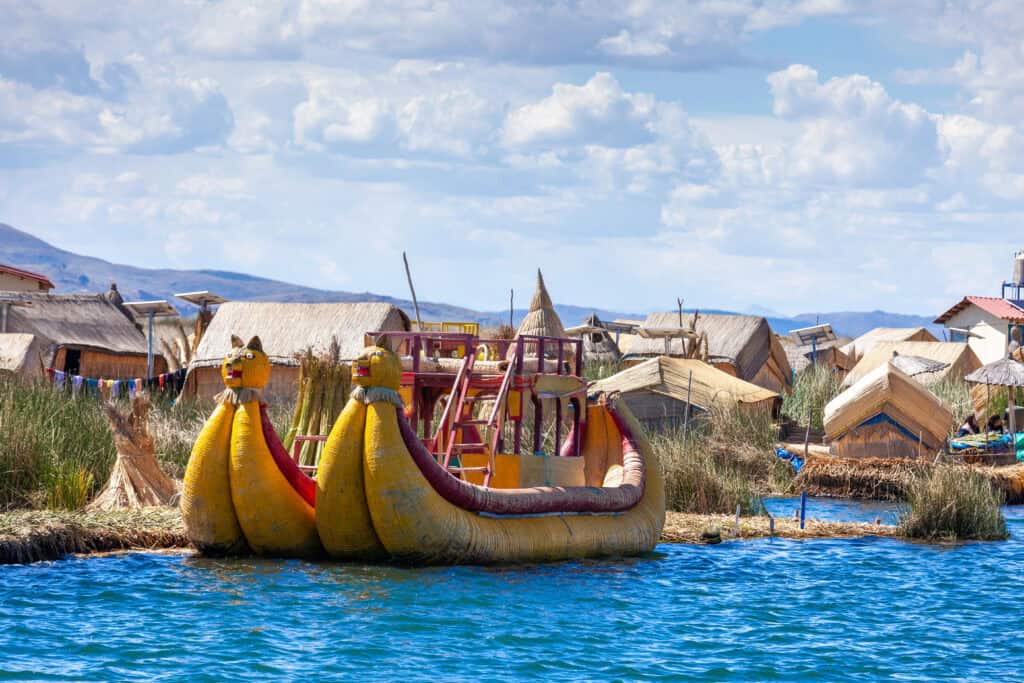
The Uros islands are made from layers of totora reeds, which also grow in the lake. The reeds are used to build the islands, boats and some of the homes. Families still live there, although tourism now plays a large role in daily life.
Taquile Island offers a different experience. It is known for its traditional textile work, which is still an important part of local culture. Visitors can walk across the island, learn more about the community and usually have lunch before returning to Puno.
Most tours leave from Puno early in the morning. A half-day tour usually visits only the Uros islands, while a full-day trip combines Uros and Taquile. The full-day option gives you more variety, but it also means spending several hours on the boat.
Lake Titicaca lies at around 3,812 meters (12,507 ft) above sea level, so it is best to take it easy if you have only just arrived in Puno. Bring warm layers, sunscreen and water, because the sun can feel strong while the wind on the lake is often cold.
For more information about Puno, Lake Titicaca, tour options and how many days to stay, read my complete Puno guide.
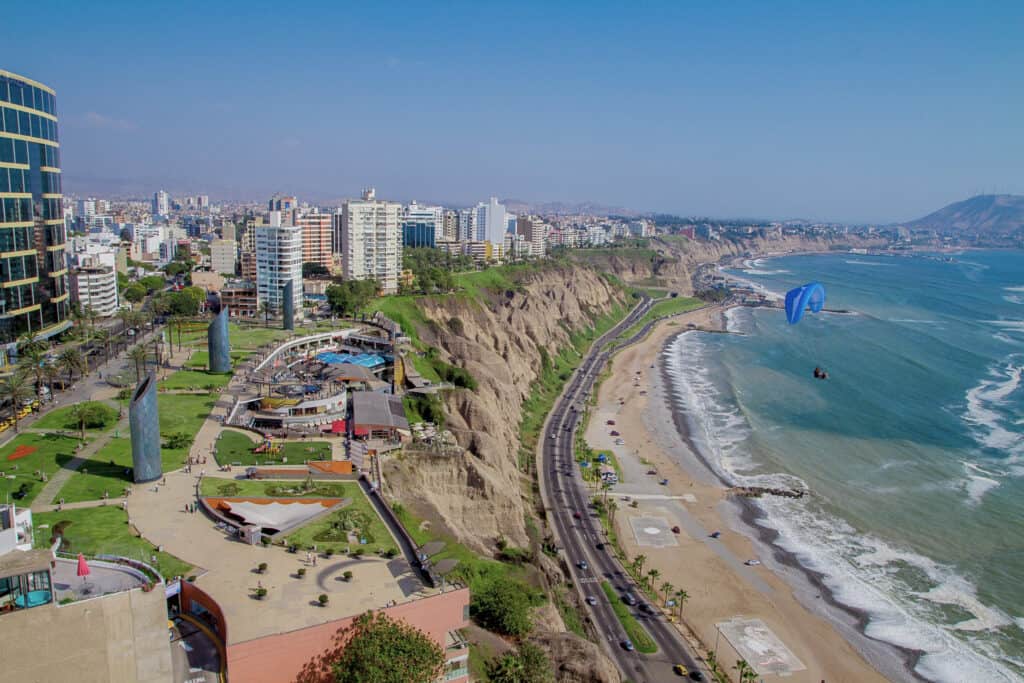
12. Try Peru’s Best Food in Lima
Lima is one of the best places in Peru to try the country’s food. The city brings together ingredients and cooking traditions from the coast, the Andes and the Amazon, so you can try many different parts of Peruvian cuisine without travelling across the country.
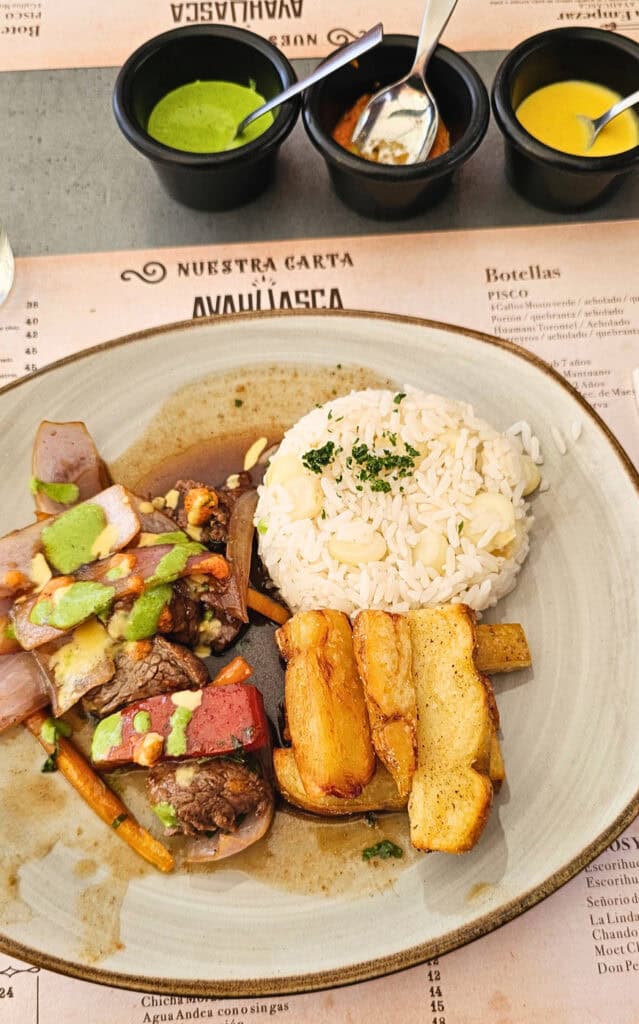
Ceviche is the best-known dish and is made with raw fish cured in lime juice, usually served with red onion, chilli, sweet potato and corn. Other common dishes include lomo saltado, ají de gallina, causa and anticuchos. Lima is also a good place to try chifa, a Peruvian-Chinese style of cooking that has become an important part of the city’s food culture.
You do not need to eat only at expensive restaurants. Local markets, small neighbourhood restaurants and simple lunch menus are often some of the best places to try traditional food at a lower price.
Miraflores, Barranco and the historic centre all have plenty of restaurants, but the experience can be very different depending on the area. Miraflores has the widest range of options, while Barranco is popular for smaller restaurants and evening meals.
If you are only staying in Lima for a short time, try at least one seafood dish and one traditional meat or chicken dish. It is also worth trying a pisco sour, although the drink can be stronger than it tastes.
For more information about where to eat, which neighbourhoods to visit and how long to stay in the city, read my complete Lima guide.
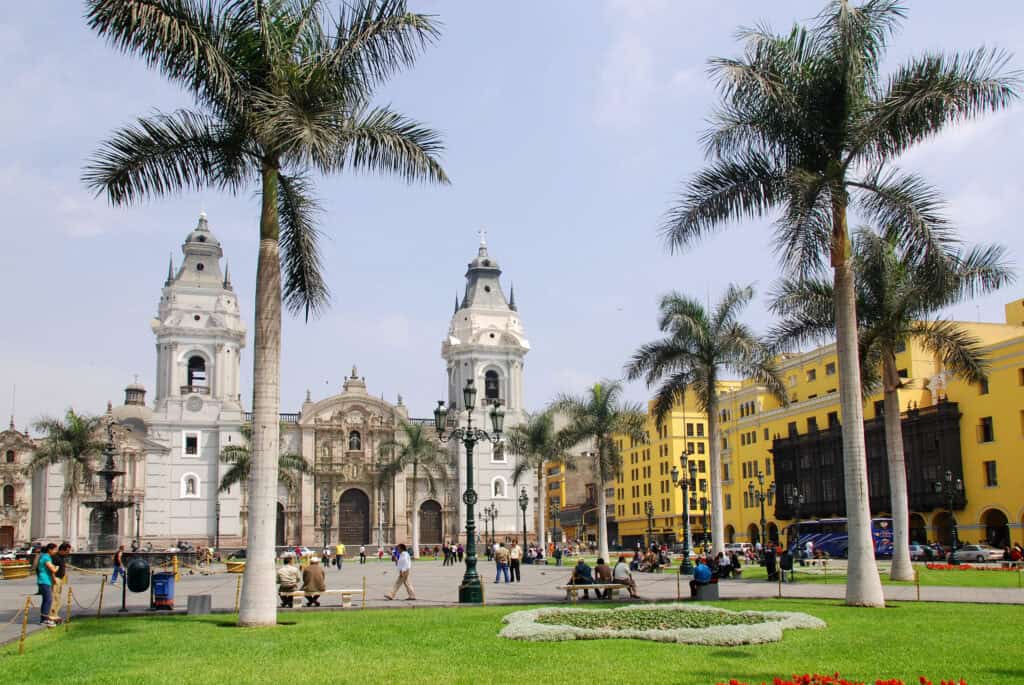
13. Explore Lima’s Historic Center
Lima’s historic center gives you a better idea of how the city developed after the Spanish founded it in 1535. For centuries, this part of Lima was the political, religious and administrative center of Spanish rule in Peru.
Plaza Mayor is the best place to start. Around the square, you will find the Government Palace, Lima Cathedral and several colonial buildings with wooden balconies. Nearby, the Monastery of San Francisco is known for its library, church and underground catacombs.
The historic center feels very different from Miraflores and Barranco. It is busier, more crowded and less polished, but it shows an important side of Lima that many travelers miss when they stay only near the coast.
You can see the main sights in around half a day. Most places are close enough to visit on foot, although it is best to plan your route in advance and avoid walking into unfamiliar areas outside the main tourist streets.
Take a taxi or ride-hailing app to and from the historic center, especially if you are staying in Miraflores or Barranco. During the day, the main squares and attractions are usually busy, but it is better not to stay in the area late at night.
For more information about Lima’s historic center, transport, safety and how many days to stay, read my complete Lima guide.
Final Thoughts on the Best Things to Do in Peru
There are many different things to do in Peru, and the best choices depend on the type of trip you want to plan. Machu Picchu may be the main reason many travelers visit, but places such as Cusco, the Sacred Valley, Huacachina, Paracas, Arequipa and Lake Titicaca all add something different to the journey.
You do not need to include every activity in one itinerary. A shorter trip can focus on Lima, Cusco, the Sacred Valley and Machu Picchu, while a longer route gives you time to add Paracas, Huacachina, Arequipa, the Colca Canyon and Puno.
The best route depends on how much time you have, how quickly you want to travel and whether you prefer hiking, history, food or outdoor activities. Use this list of the best things to do in Peru to choose the experiences that fit your trip, then follow the links to the full destination guides for more detailed planning information.
For a complete overview of the country, including transport, weather, costs and route planning, read my full Peru travel guide.