- Introduction
- Is 2 Weeks Enough for Peru?
- Overview of This 2 Week Peru Route
- Day 1: Arrive in Lima
- Day 2: Explore Lima
- Day 3: Lima to Paracas
- Day 4: Ballestas Islands and Paracas National Reserve
- Day 5: Paracas to Huacachina
- Day 6: Huacachina to Arequipa
- Day 7: Explore Arequipa
- Day 8: Colca Canyon Day Trip or Overnight Trip
- Day 9: Arequipa to Cusco
- Day 10: Acclimatize and Explore Cusco
- Day 11: Day tours from Cusco
- Day 12: Cusco to Aguas Calientes
- Day 13: Visit Machu Picchu
- Day 14: Fly Back to Lima
- Alternative Options for This 2 Week Peru Itinerary
- How Much Does 2 Weeks in Peru Cost?
- Practical Tips for Planning 2 Weeks in Peru
- Final Thoughts on This 2 Week Peru Itinerary
Introduction
Before I started living in Peru, I first came here for a backpacking trip. This route from Lima to Paracas, Huacachina, Arequipa, Cusco, Machu Picchu, and back to Lima was the itinerary I followed on my first trip.
Looking back, it was one of the best ways to see Peru in two weeks.
You get coastline, desert, colonial cities, high mountains, Inca history, and Machu Picchu all in one route. Few countries change this much in such a short time. One day you are near the Pacific coast, a few days later you are watching the sun go down behind giant sand dunes, and by the end of the trip you are deep in the Andes.
After spending much more time in Peru, I now know what I would keep the same, what I would adjust, and what first-time visitors should know before planning this kind of trip.
In this guide, I will share a practical 2 week Peru itinerary, including how to travel between places, where to slow down, and what to book in advance.
I will also include alternative options, so you can swap certain stops depending on your travel style, budget, or pace.
If you are still deciding which experiences to include, my guide to the best things to do in Peru can help you choose the activities that fit your trip.
Note: Some of the links in this itinerary are affiliate links. This means I may earn a small commission if you make a booking through them, at no extra cost to you. I only recommend tours and services that I believe can genuinely improve your trip.
Is 2 Weeks Enough for Peru?
Yes, 2 weeks is enough to see many of Peru’s main highlights and get a strong first taste of the country.
In two weeks, you can experience Lima, the coast, the desert, Arequipa, Cusco, the Andes, and Machu Picchu without feeling like you only saw one small part of Peru. It gives you a good mix of landscapes, cities, history, food, and culture.
At the same time, Peru is a large and diverse country, so you cannot see everything in 14 days. You will need to make choices based on what matters most to you.
In this itinerary, for example, I skip Lake Titicaca and the Amazon. Both are amazing places to visit, but adding them would make the route too rushed. With only two weeks, I think it is better to focus on a route that flows well and gives you enough time to actually enjoy each place.
Overview of This 2 Week Peru Route
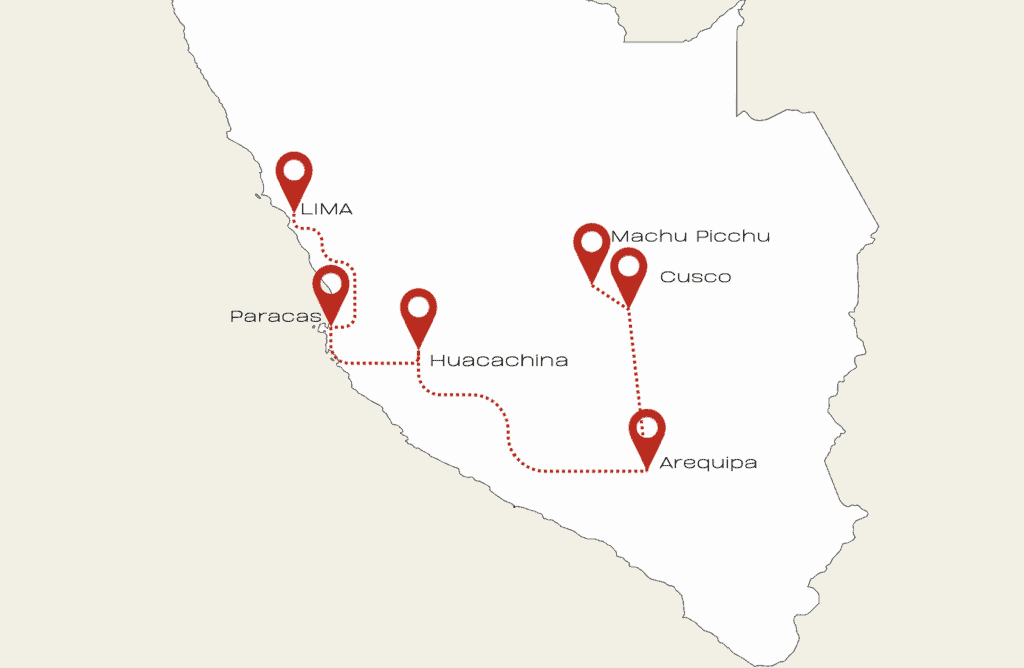
Quick route summary
This 2 week Peru route starts with a short stay in Lima. Not because Lima is the biggest highlight of Peru, but because it will most likely be your starting point, and it is still worth seeing for its food, history, and old centre. Also, starting a Peru trip without trying the food in Lima would almost feel wrong.
From Lima, you travel south to Paracas. This stop is mainly included for the Ballestas Islands and Paracas National Reserve, where Peru starts to feel much wilder than the capital.
After Paracas, the route continues to Huacachina. This tiny desert oasis is worth adding because the sand dunes are huge, the sunset is amazing, and the buggy tour feels is a whole adventure itself.
Next, you travel to Arequipa. Arequipa is one of Peru’s most beautiful cities, with white volcanic stone buildings, great local food, and Colca Canyon nearby. It is also a good place to slow down a little before heading higher into the Andes.
After that, you continue to Cusco. Cusco is where Peru really starts to feel dramatic, with Inca ruins, old streets, mountain views, and day trips in almost every direction. Just remember: the altitude is real, so this is not the place to prove how fast you can walk uphill.
From Cusco, you visit Machu Picchu. For most travelers, this is the main reason to come to Peru, and it is one of the few famous places that actually lives up to the hype.
Finally, you return to Lima for your flight home. This keeps the route simple and makes the itinerary easier to follow in two weeks.
Who this itinerary is best for
This itinerary is best for first-time travelers in Peru who want to see a lot in two weeks without planning a completely complicated route.
It is a good route if you want a mix of cities, desert, mountains, history, food, and Machu Picchu in one trip.
At the same time, this is an active itinerary. You will move every few days, take long bus rides, and use at least one domestic flight, so it is not the best option if you want a very slow or relaxing holiday.
It also works better if you travel with light or medium luggage. You do not need to be a minimalist backpacker, but dragging three suitcases through Peru will make this route feel a lot less fun.
Day 1: Arrive in Lima
What to do on your first day
Your first day in Peru will most likely start at Lima airport. From there, the first thing to do is travel to your hotel and settle in.
What you do next depends on what time you arrive and where you are staying. If you still have enough energy, this is a good moment to explore one of the safer and more tourist-friendly areas of Lima, such as Miraflores or Barranco.
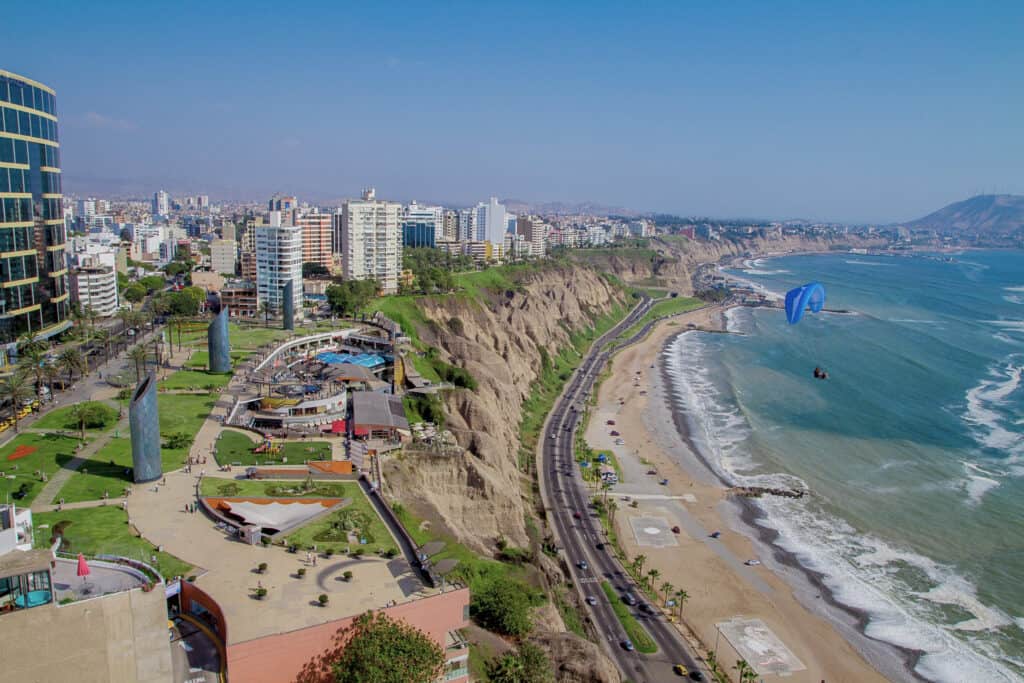
Both areas are easy places to spend your first evening. You will find plenty of restaurants, cafés, small bars, and even clubs if you feel like going out. After a long flight, it is a nice way to get your first taste of the city without making the day too complicated.
I would not plan too much for your arrival day. Keep it simple, eat well, walk around a little, and save the bigger Lima sightseeing for the next day.
For a more detailed breakdown of where to stay, what to do, and how to plan your time in the city, you can also read my complete Lima Travel Guide.
Day 2: Explore Lima
Your second day in Peru is a good moment to properly explore Lima. After your arrival day, you will have more time and energy to see a few different sides of the city.
See the Historic Center of Lima
Start with the Historic Center of Lima if you want to see the older side of the capital. Around Plaza Mayor, you will find colonial buildings, churches, government buildings, and streets that show Lima’s history. It is best to visit this area during the day.
Try Lima’s Food Scene
Lima is one of the best food cities in South America, so this is a great place to start tasting Peruvian food. A food tour is a good option if you want an easy introduction. If your budget allows it, you can also book one of Lima’s famous high-end restaurants.
Go Surfing or Relax by the Coast
If you want something active, you can go surfing in Miraflores. There are surf schools along the coast, so it is easy to arrange. If you prefer a slower day, walk along the cliffs, visit Larcomar, or spend time in Miraflores or Barranco.
Day 3: Lima to Paracas
How to get from Lima to Paracas
On day 3, you leave Lima and travel south to Paracas. There are several bus operators in Peru, including Cruz del Sur, Peru Hop, and Siva, so booking this route is quite easy.
Cruz del Sur is usually one of the most comfortable options, especially for longer bus rides. The trip from Lima to Paracas takes around 3.5 to 4 hours, depending on traffic and the bus company.
Make sure to arrive at the bus station about 1 hour before departure. This gives you enough time to check in, drop off your luggage, and board without stress.
Once you arrive in Paracas, you can check into your accommodation and take it easy for the rest of the day. If you want to stay in a hostel, it is smart to book early, especially during high season, because the better hostels can fill up quickly.
Hotels and Airbnbs are also good options in Paracas, especially if you prefer a quieter stay or more comfort after a few travel days.
I recommend taking a morning or early afternoon bus from Lima, so you still have time to arrive in Paracas, check in, and walk around before sunset. Paracas is much smaller and calmer than Lima, so it is an easy place to slow down after your first few days in the capital.
If you want a more detailed overview of bus companies, safety, travel times, and what to expect on long-distance journeys, be sure to read my complete Traveling Peru by Bus Guide before your trip.
Where to stay in Paracas
The best place to stay in Paracas is in the small centre near the water. This is the easiest area because most restaurants, cafés, tour offices, and the main waterfront are within walking distance.
You do not really need Uber or taxis if you stay here. Paracas is small, and most things you need are close together.
The bus stop for companies like Cruz del Sur is also easy to reach. It is about 15 minutes on foot from the centre, or around 4 minutes by taxi.
If you travel with light luggage, walking from the bus stop to your accommodation is very doable. With heavier bags, a short taxi ride is the easier option.
Day 4: Ballestas Islands and Paracas National Reserve
What to do in Paracas
Paracas is small, so you do not need a complicated plan here. Most travelers come for two main reasons: the Ballestas Islands and Paracas National Reserve.
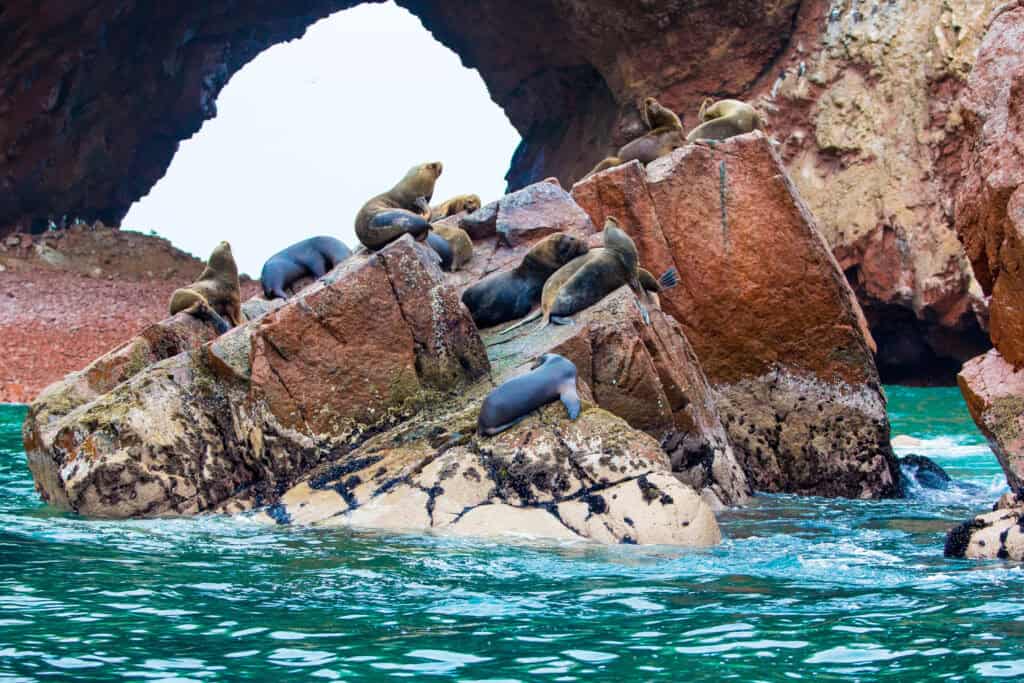
The Ballestas Islands are often called the “poor man’s Galápagos,” but I would not see them as a replacement for the Galápagos. They are simply a good, easy boat trip where you can see sea lions, birds, and dramatic rock formations just off the coast.
Paracas National Reserve is the other main highlight. This is where the desert meets the sea, and it gives you some of the most unique landscapes on this route.
It is smart to book these tours in advance, especially in high season. Almost every traveler in Paracas wants to visit the same two places, so tours can fill up.
If you want something more active, there are also other options around Paracas, such as paragliding, diving, or buggy rides in the national reserve. These are not must-do activities for everyone, but they can be a nice extra if you have more time or want something different.
Day 5: Paracas to Huacachina
How to get from Paracas to Huacachina
The easiest way to get from Paracas to Huacachina is by bus. You can use the same kind of bus operators as before, such as Cruz del Sur, Peru Hop, or other local companies.
If you are staying in the centre of Paracas, you can simply walk back to the bus stop, especially if you travel with light luggage.
One important thing to know is that you do not take the bus directly to Huacachina. You take the bus from Paracas to Ica, which is the city next to Huacachina.
The trip from Paracas to Ica usually takes around 1 to 1.5 hours. Once you arrive in Ica, you can take a short taxi or tuk-tuk ride to Huacachina.
The ride from Ica to Huacachina is quick and easy, usually around 10 minutes depending on traffic.
What to do in Huacachina
You do not need a lot of time in Huacachina. The oasis is small, with hotels, restaurants, and hostels built around the lagoon, so it is easy to understand the place quickly.
Huacachina is also known as a party stop. If you want that kind of atmosphere, there are bigger party hostels like Wild Rover, where you can meet other travelers and go out in the evening.
The two main activities here are the dune buggy tour and sandboarding. The buggy tour takes you into the huge sand dunes around Huacachina, and sandboarding is basically sliding or “surfing” down the dunes on a board.
Most tours combine both activities and often finish with sunset in the dunes before returning to the oasis. You can easily book these tours through hotels and hostels in Huacachina, and they usually pick you up directly.
A few useful things to bring are sunglasses, sunscreen, and a scarf, buff, or balaclava to cover your mouth. There is a lot of sand, and it really does get everywhere.
For a more detailed guide read the Complete Huacachina guide.

Day 6: Huacachina to Arequipa
How to get from Huacachina to Arequipa
To travel from Huacachina to Arequipa, you first need to go back to Ica. Huacachina does not have its own main bus terminal, so you can take a short taxi or tuk-tuk from the oasis to the bus station in Ica.
From Ica, you can take a long-distance bus to Arequipa. Companies like Cruz del Sur, Civa, or Peru Hop often run this route, depending on the schedule and season.
This is one of the longer travel days in this 2 week Peru itinerary. The bus from Ica to Arequipa usually takes around 11 to 13 hours, so many travelers choose an overnight bus.
An overnight bus can save you a hotel night and gives you more time during the day, but try to book a comfortable seat if your budget allows it. For this route, a better bus really makes a difference.
As with the other buses in Peru, arrive at the bus station about 1 hour before departure so you have enough time to check in and drop off your luggage.
First evening in Arequipa
After the long journey from Huacachina, keep your first evening in Arequipa simple. Check into your accommodation, take a shower, and give yourself time to settle in before doing too much.
The best area to stay in Arequipa is around the historic centre and Plaza de Armas. This keeps you close to restaurants, cafés, main sights, and easy walking routes, so you do not need to spend much time moving around the city.
Arequipa is also your first real step towards higher altitude. The city sits at around 2,335 meters / 7,660 feet above sea level. Many travelers do not have problems here because it is not extremely high, but tiredness after a long bus ride can still make you feel a bit off.
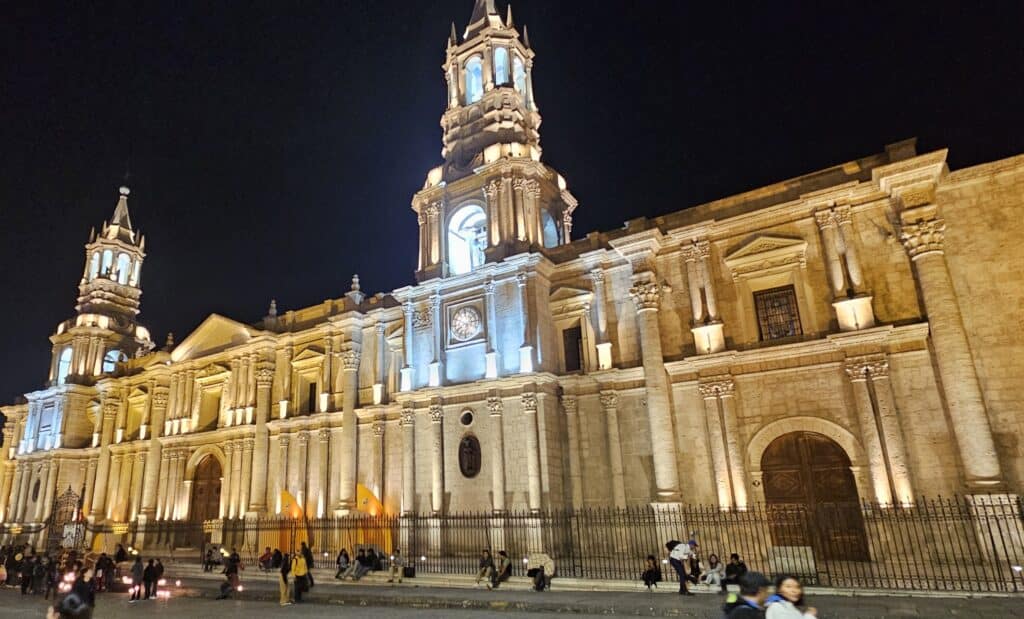
If you still have energy, walk to the Plaza de Armas. It is one of the most beautiful main squares in Peru, especially in the evening when the buildings are lit up.
Arequipa is also a great city for food, so this is a good place to try a local restaurant. Keep it relaxed, enjoy your first look at the city, and save the bigger sightseeing for the next day.
Day 7: Explore Arequipa
For a deeper look at the city, including where to stay, extra day trips, food tips, and practical travel advice, read my full Arequipa Travel Guide.
Plaza de Armas
If you did not visit the Plaza de Armas on your first evening, this is the best place to start your day in Arequipa.
The square is beautiful, with the cathedral, white stone buildings, palm trees, and mountain views in the background. It is one of those places where you can walk around slowly, sit for a while, and still feel like you are seeing an important part of the city.
Around the Plaza de Armas, you will also find plenty of restaurants, cafés, and tour offices. This makes it a useful place to book tours, plan your next activities, or simply stop for coffee before exploring more of Arequipa.
Santa Catalina Monastery
Santa Catalina Monastery is one of the best places to visit on your first full day in Arequipa. It is close to the historic centre, so it is easy to combine with Plaza de Armas.
The monastery feels almost like a small city inside the city, with narrow streets, colorful walls, courtyards, and quiet corners. It is a good place to walk around slowly and take your time.
If you only visit one paid attraction in Arequipa, this is one of the best options to choose.
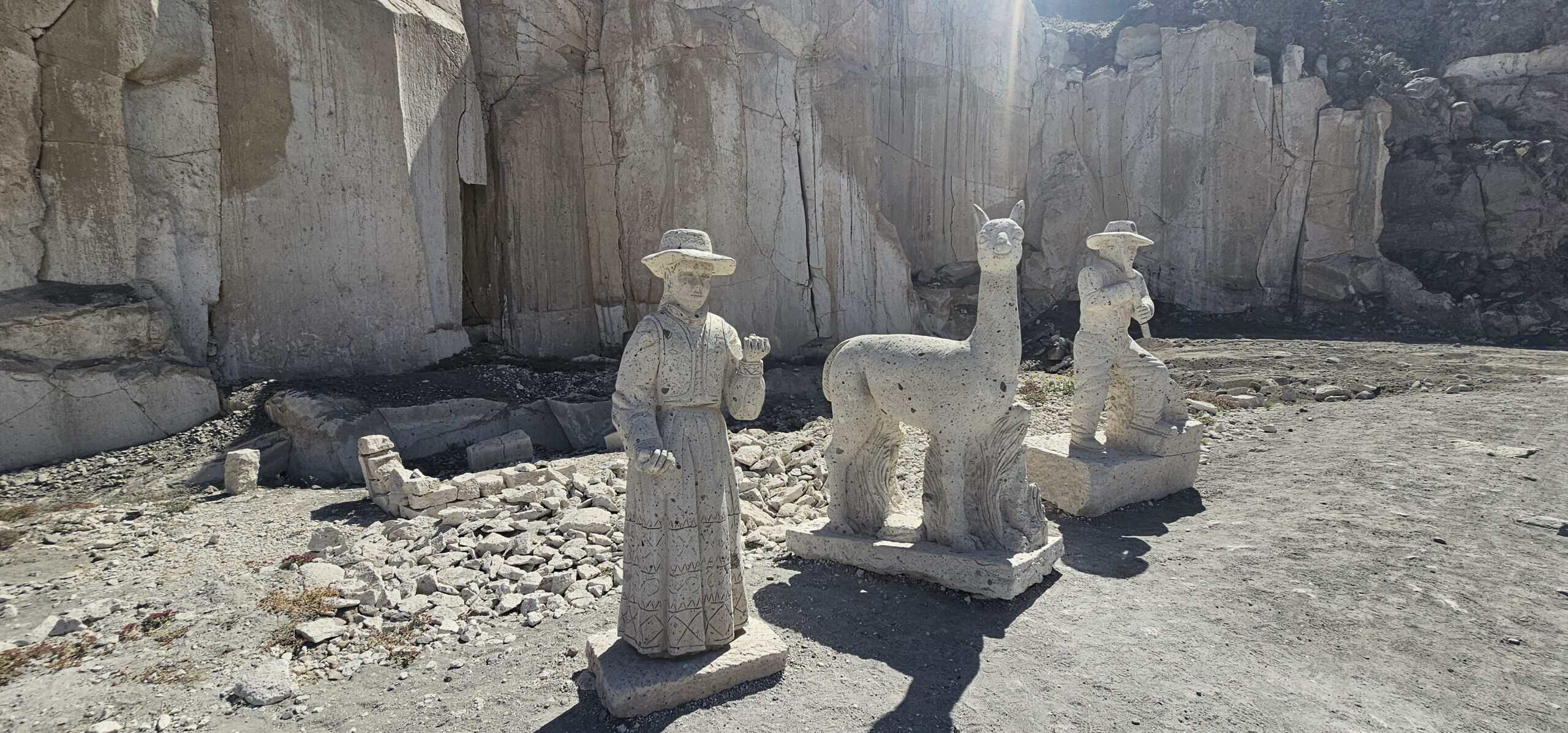
Ruta del Sillar-tour
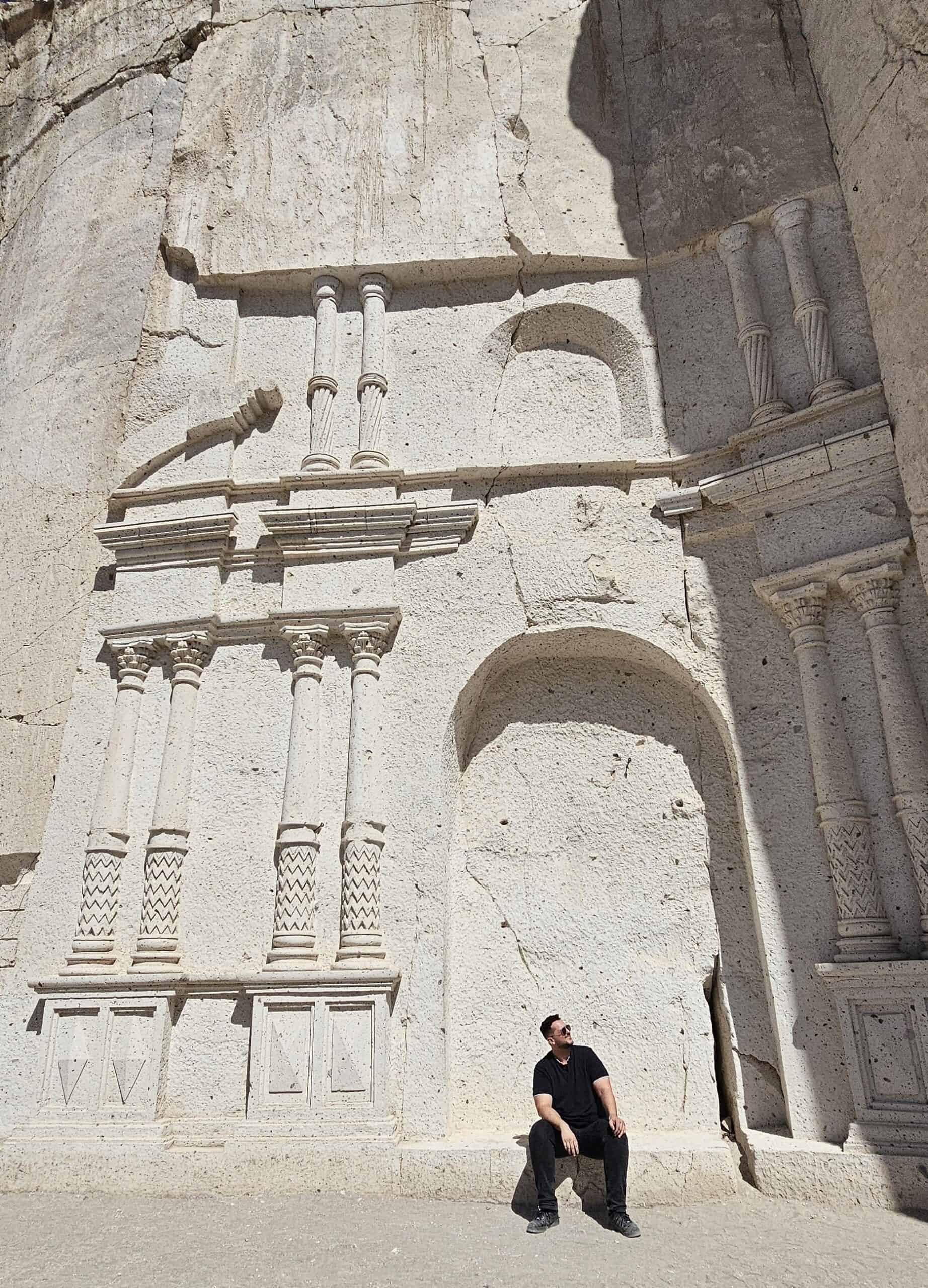
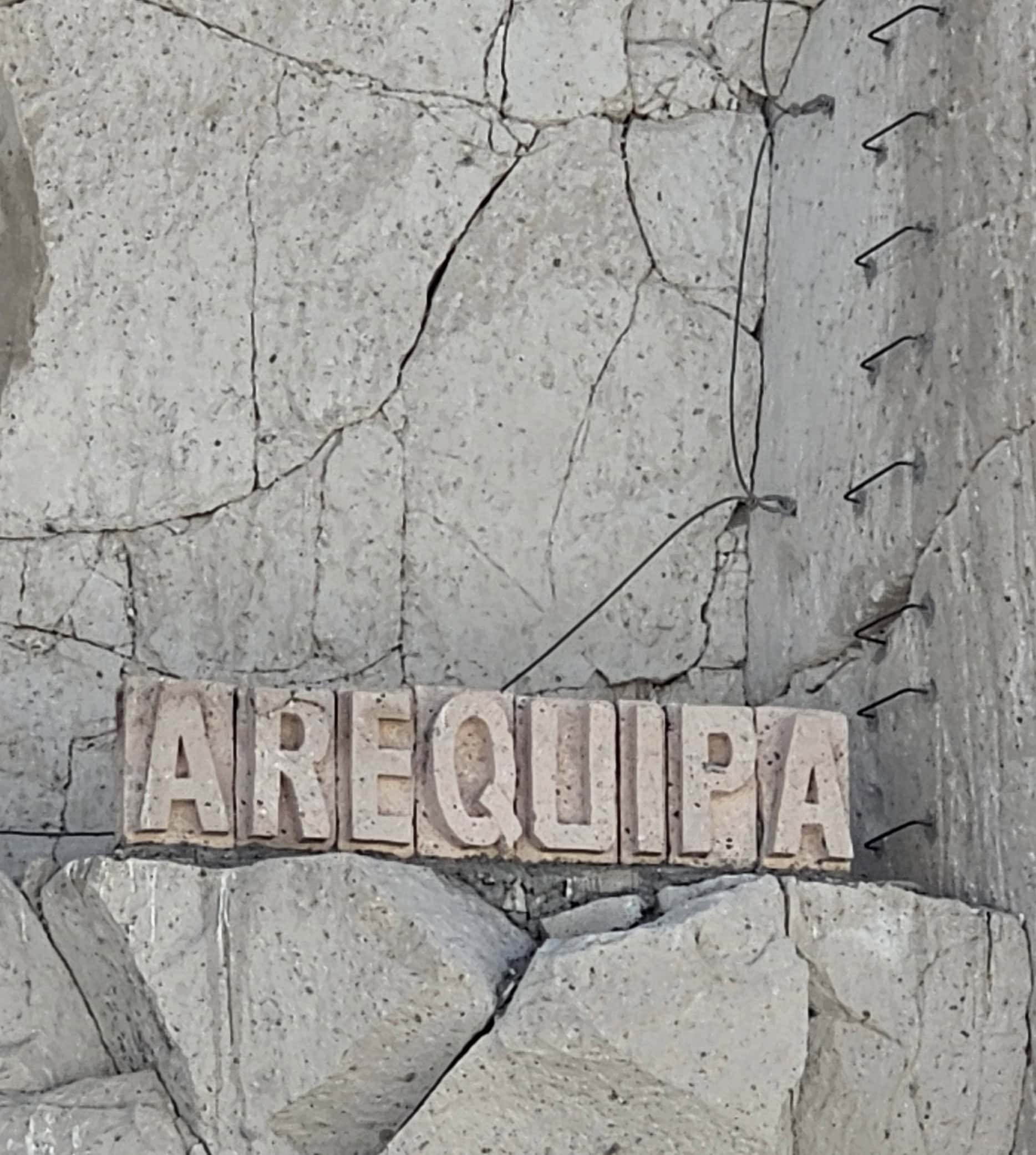
The Ruta del Sillar tour is another good option for your first full day in Arequipa. This tour takes you to the stone quarries outside the city, where the famous white volcanic stone of Arequipa comes from.
This stone is the reason Arequipa is often called the White City. You will see carved walls, quarry landscapes, and learn how the material was used to build many of the historic buildings in the centre.
It is an easy half-day trip, so you can still combine it with Plaza de Armas or Santa Catalina Monastery on the same day.
Day 8: Colca Canyon Day Trip or Overnight Trip
Colca Canyon day trip
A Colca Canyon day trip is the easiest option if you want to visit the canyon without changing your full itinerary. It is a long day, but it fits well if you only have two weeks in Peru.
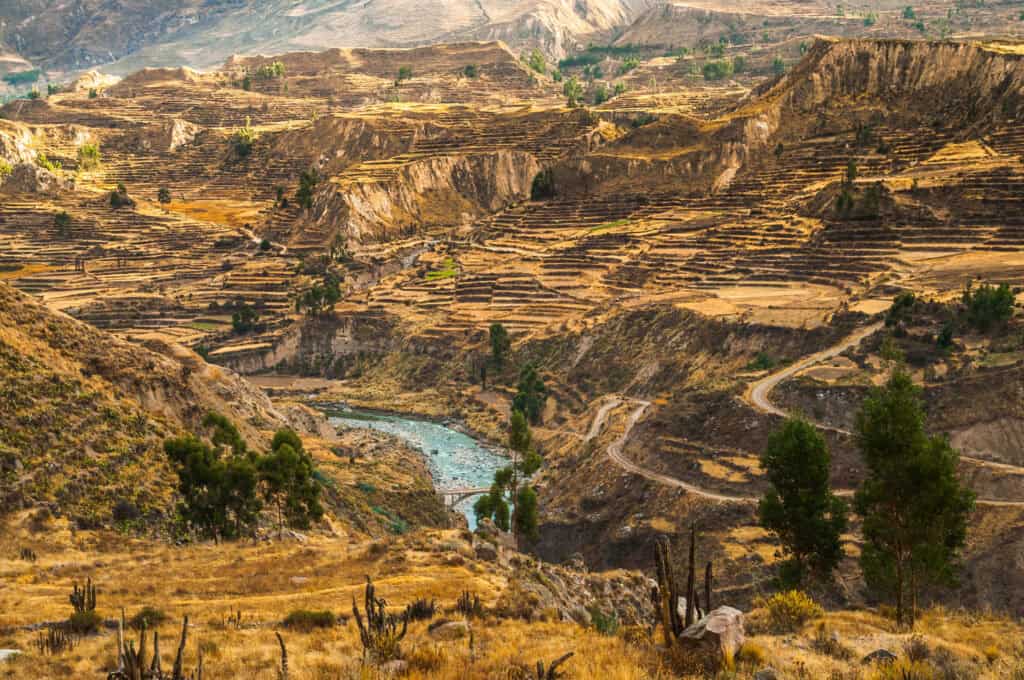
Colca Canyon is a must visit because it shows a completely different side of Peru. The landscapes are huge, dry, and dramatic, with deep valleys, small villages, mountain views, and a good chance to see condors flying above the canyon.
Most day tours leave Arequipa very early in the morning, often before sunrise. The drive is long, and on some routes you reach very high points of around 4,900 meters / 16,000 feet above sea level. Because of this, it is important to take altitude seriously, even if you felt fine in Arequipa.
A normal day trip usually does not include a long hike into the canyon. Most of the walking is short and easy, around viewpoints and small stops, so the actual hiking time is often only 1 to 2 hours in total.
Also check what is included before booking your tour. Some Colca Canyon tours do not include the national park entrance fee, which is usually around 70 soles. That is roughly €17–18 or $20, depending on the exchange rate.
The downside is that a day trip can feel rushed. You spend many hours in the bus, so this option is best if you want to see Colca Canyon, but do not have enough time for an overnight trip.
Colca Canyon overnight option
The Colca Canyon overnight option is better if you want a slower and more complete experience. Instead of seeing the canyon mostly from viewpoints, you have more time to hike, visit small villages, and actually feel the size of the landscape.
Most overnight tours include a hike down into the canyon on the first day and a steep hike back up the next morning. The hiking time depends on the route, but you can expect several hours of walking, so this option is much more active than a day trip.
The big advantage is that it feels less rushed. You do not spend the whole day jumping in and out of a bus, and you get to see more of the canyon from inside the valley.
The downside is that it takes two full days, so it does not fit as easily into this 2 week Peru itinerary. I would only choose the overnight option if you are comfortable with hiking and willing to adjust the route.
For example, this can work well if you prefer to skip Paracas, Huacachina, or both, and spend more time around Arequipa instead. In that case, flying from Lima to Arequipa is the best option to save time, and domestic flights in Peru can also be quite affordable if you book them in advance.
That way, you can add Colca Canyon without making the rest of the itinerary feel too rushed.
Day 9: Arequipa to Cusco
Flight from Arequipa to Cusco
The easiest way to travel from Arequipa to Cusco is by flying. This saves a lot of time compared to the bus and makes the route much more comfortable, especially in a 2 week Peru itinerary.
The flight itself is short, usually around 1 hour, but you still need to count time for getting to the airport, check-in, luggage, and transport after arrival in Cusco.
If you book in advance, domestic flights in Peru can be quite affordable. I would recommend this option if your budget allows it, because it gives you more time and energy for Cusco, the Sacred Valley, and Machu Picchu.
Once you arrive in Cusco, take the rest of the day slowly. Cusco is much higher than Arequipa, so this is not the day to plan a packed schedule.
Bus from Arequipa to Cusco
Taking the bus from Arequipa to Cusco is also an option, and it is often cheaper than flying.
The trip usually takes around 10 to 12 hours, depending on the bus company, traffic, and route. Because of the long distance, many travelers choose an overnight bus.
You can use the same type of bus operators as earlier in the itinerary, such as Cruz del Sur, Civa, or Peru Hop, depending on availability and your preferred travel style.
If you choose the bus, try to book a comfortable seat, especially for an overnight journey. It saves money, but it is still a long travel day, so comfort matters.
First evening in Cusco
When you arrive in Cusco, you can easily arrange an Uber or taxi from the airport or bus station to your accommodation. This is the easiest option, especially if you arrive tired or with luggage.
The best area to stay in Cusco is around the historic centre, close to Plaza de Armas or San Blas. This keeps you within walking distance of restaurants, cafés, tour offices, and many of the main places you will want to visit.
Take your first evening slowly. Cusco sits at high altitude, so it is better to check in, eat something light, drink water, and let your body adjust before planning too much.
For more detailed information about where to stay, what to do, and how to plan your time in the city, you can also read my full Cusco Travel Guide.
Day 10: Acclimatize and Explore Cusco
Best things to do in Cusco on your first day
Your first full day in Cusco should be about taking it slow. The city sits at high altitude, so even if you feel fine, it is smart to give your body time to adjust.
Start with an easy walk around Plaza de Armas, the main square of Cusco. From there, you can visit San Pedro Market, where you will find local food, fresh juices, souvenirs, and a more everyday side of the city.
You can also walk through San Blas, one of the nicest areas in Cusco, with narrow streets, small shops, cafés, and viewpoints over the city. If you still feel good, Sacsayhuamán is also a great place to visit, but take your time because even small hills can feel harder here.
Avoid heavy activities or hikes on this day. Eat light, drink plenty of water, and skip alcohol for your first night in Cusco so your body can adjust better.
Day 11: Day tours from Cusco
If you feel good after your first full day in Cusco, day 11 is a good moment to add a day tour. Cusco has many options, so choose something that fits your energy, budget, and how well you are adjusting to the altitude.
Rainbow Mountain is one of the most famous day trips from Cusco and is absolutely worth considering. Just keep in mind that it is a tough hike at very high altitude, so I would only choose this if you feel your body can handle it. Horses are usually available if the hike becomes too hard, but they cost extra and will not take you all the way to the top.
For more details, you can read my full Rainbow Mountain Peru guide, where I explain the hike difficulty, altitude, what to pack, and how to prepare before going.
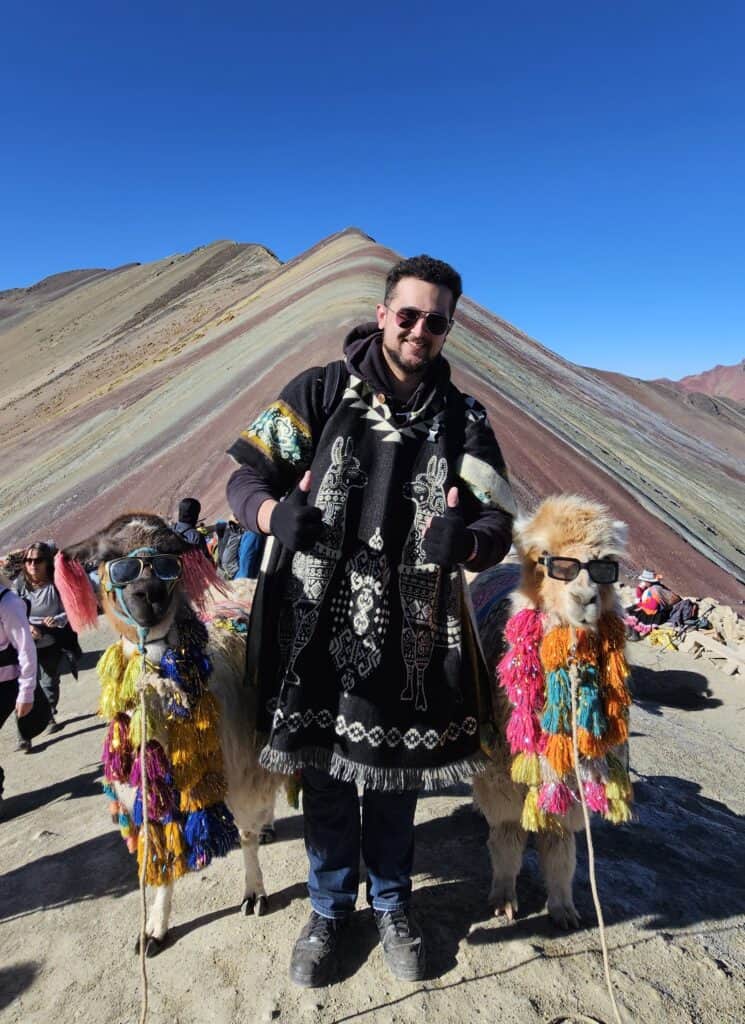
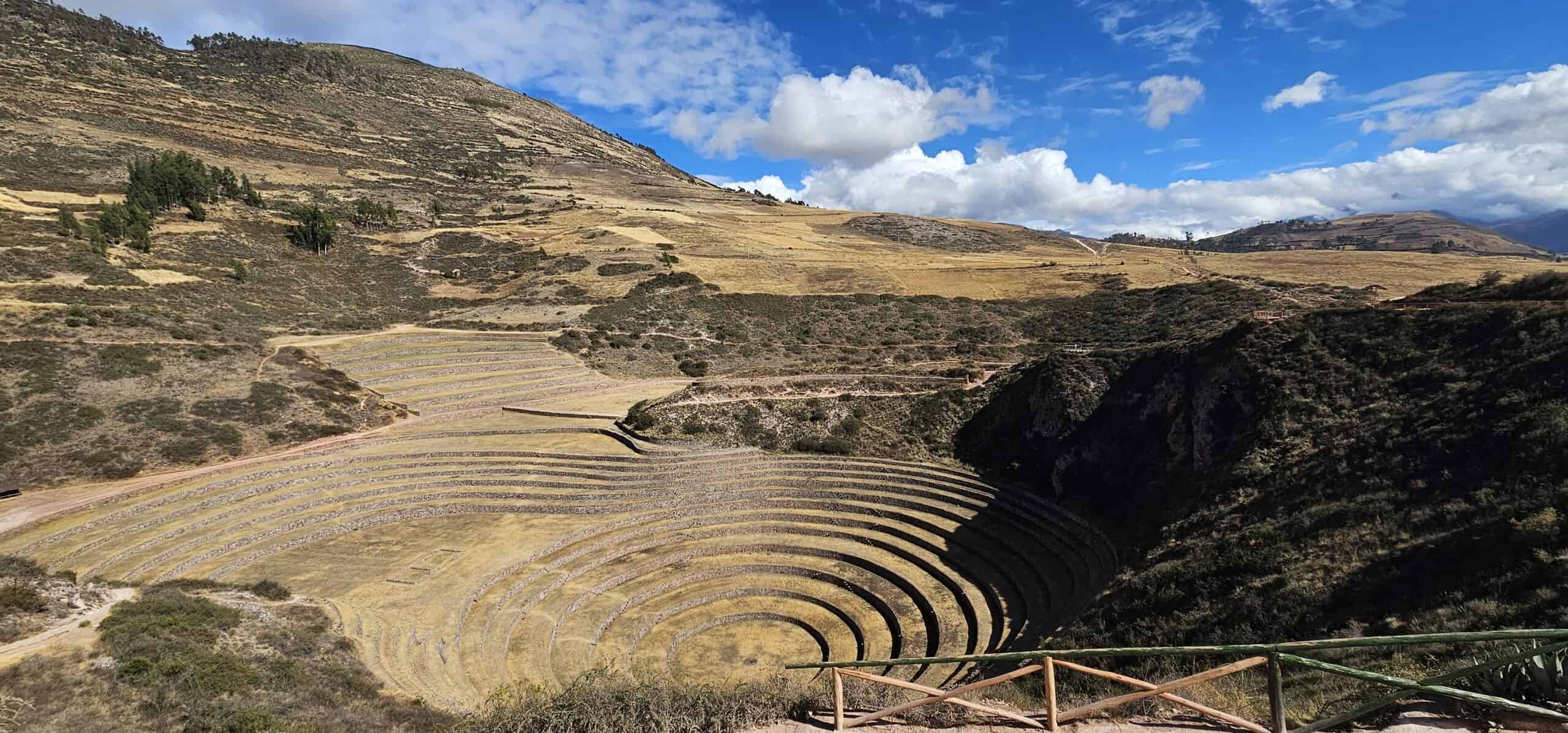
A more relaxed but still adventurous option is a quad bike tour to Moray and the Maras Salt Mines. This is a fun way to see the Sacred Valley area without doing a heavy hike.

You can also do a horseback riding tour to the Temple of the Moon and Chacan Mountain. This is a different way to explore the area around Cusco and can be a good option if you want something active, but not as intense as Rainbow Mountain.
Day 12: Cusco to Aguas Calientes
On day 12, you travel from Cusco to Aguas Calientes, the small town below Machu Picchu.
There are two main ways to visit Machu Picchu from Cusco. You can do it as a full day trip from Cusco, but I recommend staying one night in Aguas Calientes if your itinerary allows it.
Staying overnight makes the visit much easier. You do not have to start your day extremely early in Cusco, and you are already close to Machu Picchu the next morning.
To get there, you first take a bus, taxi, or private transfer from Cusco to Ollantaytambo. From Ollantaytambo, you take the train to Aguas Calientes.
Aguas Calientes is the town next to Machu Picchu and the main base for visiting the site. It is very touristy, but it is also the most practical place to stay before your Machu Picchu visit.
Day 13: Visit Machu Picchu
Day 13 is the day you visit Machu Picchu, one of the biggest highlights of this 2 week Peru itinerary.
From Aguas Calientes, you can take the bus up to the entrance of Machu Picchu. The ride is short, but it can get busy, so it is smart to arrive early and give yourself enough time.
Make sure your Machu Picchu ticket is booked in advance. Tickets are linked to specific circuits and entry times, so you cannot just show up and choose everything on the spot.
After visiting Machu Picchu, you can return to Aguas Calientes by bus or walk back down if you want to save money and still have energy.
From there, most travelers take the train back to Ollantaytambo and then continue by bus, taxi, or transfer back to Cusco. It is a long but unforgettable day, so try not to plan anything important for the evening.
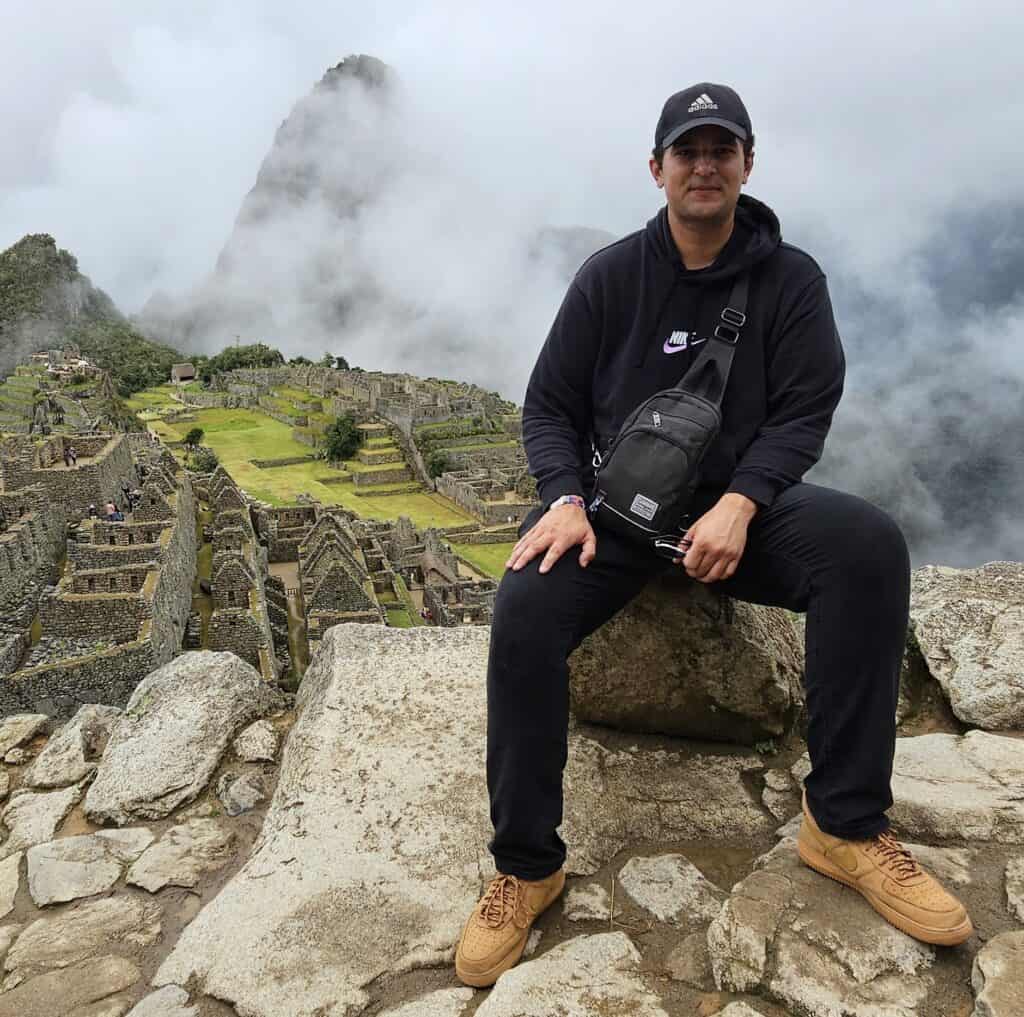
Day 14: Fly Back to Lima
On day 14, you travel back from Cusco to Lima. Time-wise, flying is by far the best option, especially at the end of a 2 week Peru itinerary.
The flight from Cusco to Lima usually takes around 1.5 hours. A bus is much cheaper sometimes, but it can take around 20 to 22 hours, so I would not recommend it unless you have extra time and really want to save money.
Once you arrive in Lima, you are back near the international airport and ready to fly home. Depending on your flight time, you can either stay close to the airport or spend a final few hours in Miraflores or Barranco before leaving Peru.
Alternative Options for This 2 Week Peru Itinerary
Spend more time in Cusco
Of course, you can adjust this itinerary depending on what kind of trip you want. One of the best changes you can make is spending more time in Cusco.
Cusco has more than enough to keep you busy for several extra days. You can add more day trips, hikes, Inca sites, Sacred Valley stops, or simply give yourself more time to adjust to the altitude.
If this is your choice, I would recommend skipping Paracas, Huacachina, or both. They are fun stops, but getting there and continuing south takes time, so removing them gives you more space for Cusco and the Andes.
How Much Does 2 Weeks in Peru Cost?
Budget travel estimate
Peru can still be a good country for budget travel, but your total cost depends a lot on how many tours you book.
For a backpacker-style trip, staying in hostel dorms, taking buses, eating mostly at local markets or cheaper cafés, and choosing budget tours, you can expect to spend around $45–70 per day, not including bigger one-off costs like Machu Picchu trains and entry tickets.
Hostel dorms are usually one of the easiest ways to save money. In many places, you can find dorm beds from around $8–20 per night, although Lima, Cusco, and Aguas Calientes are usually more expensive than smaller stops.
Food can also be cheap if you eat local. Markets, menu del día restaurants, and simple cafés are much cheaper than tourist restaurants, and this is where you can keep your daily budget under control.
Transport by bus is usually affordable, especially compared to flights. For this itinerary, you should budget for buses between Lima, Paracas, Ica, Arequipa, and possibly Cusco, plus one domestic flight from Cusco back to Lima if you want to save time.
The biggest costs are usually the tours and Machu Picchu. Things like the Ballestas Islands, Huacachina buggy tour, Colca Canyon, Sacred Valley tours, Rainbow Mountain, and Machu Picchu transport can add up quickly. Machu Picchu entrance tickets for foreign adults are listed around S/152, or about $40, before adding trains, buses, guides, or extra hikes.
As a rough budget estimate, I would expect a low-budget 2 week Peru itinerary to cost around $900–1,400 per person, depending on how many tours you do, how early you book, and how cheap you keep your accommodation and food.
If you want to save money, the best place to be selective is with tours. Choose the ones that really matter to you, compare prices, and go for the cheaper options where it makes sense. You can save on food and hostels, but tours are usually where the budget starts to climb.
Mid-range travel estimate
For a mid-range 2 week Peru itinerary, you can expect to spend more for comfort, better locations, and fewer stressful travel days.
This usually means staying in private rooms, simple hotels, or nicer Airbnbs instead of hostel dorms. In places like Lima, Arequipa, and Cusco, a comfortable private room can often cost around $35–80 per night, while Aguas Calientes is usually more expensive because it is the main base for Machu Picchu.
Food also becomes a bigger part of the budget if you mix local meals with nicer restaurants. You can still eat cheaply in Peru, but if you want to try good restaurants in Lima, Arequipa, or Cusco, your daily food budget will be much higher than a backpacker budget.
For transport, a mid-range traveler will probably use comfortable buses for shorter routes, but also take domestic flights where they save a lot of time. Flying from Arequipa to Cusco and from Cusco back to Lima can make the route feel much easier.
Tours are still the biggest extra cost. If you choose better-rated tours, small-group options, guides, or more convenient transfers, the price can rise quickly, especially around Machu Picchu, Colca Canyon, Rainbow Mountain, and the Sacred Valley.
As a rough estimate, a mid-range 2 week Peru trip can cost around $1,500–2,500 per person, depending on your hotels, flights, restaurants, and how many tours you book.
The best way to keep this budget under control is to spend more where it really improves the trip, such as Machu Picchu, comfortable long-distance transport, and good accommodation in Cusco or Lima, while keeping some meals and smaller tours simple.
Extra costs to keep in mind
Besides accommodation, food, and transport, there are a few extra costs that can easily add up during a 2 week Peru itinerary.
The biggest one is Machu Picchu. You need to budget for the entrance ticket, train to Aguas Calientes, bus up to Machu Picchu, and possibly a guide. This can become one of the most expensive parts of the whole trip.
Tours are another important cost. Ballestas Islands, Paracas National Reserve, Huacachina buggy tour, Colca Canyon, Rainbow Mountain, Sacred Valley trips, and other day tours can quickly increase your total budget.
Also keep some money aside for taxis, Ubers, airport transfers, luggage storage, tips, laundry, snacks, bottled water, and small entrance fees. These are not huge costs by themselves, but over two weeks they do matter.
If you want to save money, do not only look at hotel and food prices. The real difference in your budget often comes from how many tours you book and how much comfort you want with transport.
Practical Tips for Planning 2 Weeks in Peru
Book Machu Picchu early
Machu Picchu is the one part of this itinerary you should not leave until the last moment. Tickets are limited, and popular circuits or entry times can sell out, especially in high season.
Book your Machu Picchu ticket first, then plan your train to Aguas Calientes and your night there around that date. This makes the rest of your route much easier to organize.
Also check which circuit you want before buying your ticket. The rules can be confusing at first, and not every ticket gives you the same view or route inside Machu Picchu.
For a full step-by-step explanation, you can read my complete Machu Picchu guide before booking.
Plan around altitude
Altitude is one of the most important things to think about when planning 2 weeks in Peru. Places like Arequipa, Cusco, Rainbow Mountain, and Colca Canyon are all much higher than Lima, Paracas, and Huacachina.
This is also one of the reasons why I plan Arequipa before Cusco in this itinerary. Arequipa is already higher than the coast, but still much lower than Cusco, so it gives your body a first step towards altitude before going deeper into the Andes.
Do not plan your hardest hikes immediately after arriving in Cusco. Give yourself at least one easier day first, walk slowly, drink plenty of water, and eat light meals while your body adjusts.
It is also smart to avoid alcohol on your first night at altitude. Even if you feel fine at first, altitude can hit later, and being tired from travel can make it worse.
For this itinerary, the route works well because you build up slowly: first Lima, then the coast and desert, then Arequipa, and only after that Cusco and Machu Picchu.
Keep one flexible day if possible
If your schedule allows it, try to keep one flexible day in your 2 week Peru itinerary. Peru is easy to travel through, but delays can still happen, especially with buses, weather, or long travel days.
A flexible day also gives you space to add something you hear about locally. Sometimes another traveler, hostel, or guide recommends a tour you had not planned, and it is nice to have room to say yes.
It can also help if you feel tired or get sick for a day. This route includes altitude, long bus rides, and busy travel days, so having one extra day makes the whole trip feel less stressful.
Final Thoughts on This 2 Week Peru Itinerary
This 2 week Peru itinerary is a great route if you are visiting Peru for the first time and want to see a lot without making the trip too complicated.
You get a strong mix of Lima, the coast, desert, Arequipa, Cusco, the Andes, and Machu Picchu. It is an active route, but it also gives you a real first taste of how different Peru can feel from place to place.
Of course, you can adjust the itinerary depending on your travel style. If you want more hiking, spend extra time in Cusco. If you want a slower trip, skip one or two stops and give yourself more breathing room.
For me, this route worked very well on my first trip through Peru, and after spending much more time in the country, I still think it is one of the best ways to experience Peru in two weeks.