- Why Visit Arequipa?
- Is Arequipa Peru Worth Visiting?
- How Many Days Do You Need in Arequipa?
- Best Things to Do in Arequipa
- Best Day Trips from Arequipa
- Colca Canyon Day Trip
- Where to Stay in Arequipa
- How to Get to Arequipa
- Getting Around Arequipa
- Best Time to Visit Arequipa
- Is Arequipa Safe?
- Practical Travel Tips for Arequipa
- Arequipa or Cusco: Which Should You Visit?
- Final Thoughts on This Arequipa Travel Guide
Why Visit Arequipa?
Arequipa Peru is one of those places that surprises many travelers. Some people only stop here for one night before heading to Colca Canyon or Cusco, but that often ends up being a mistake. The city deserves more time.
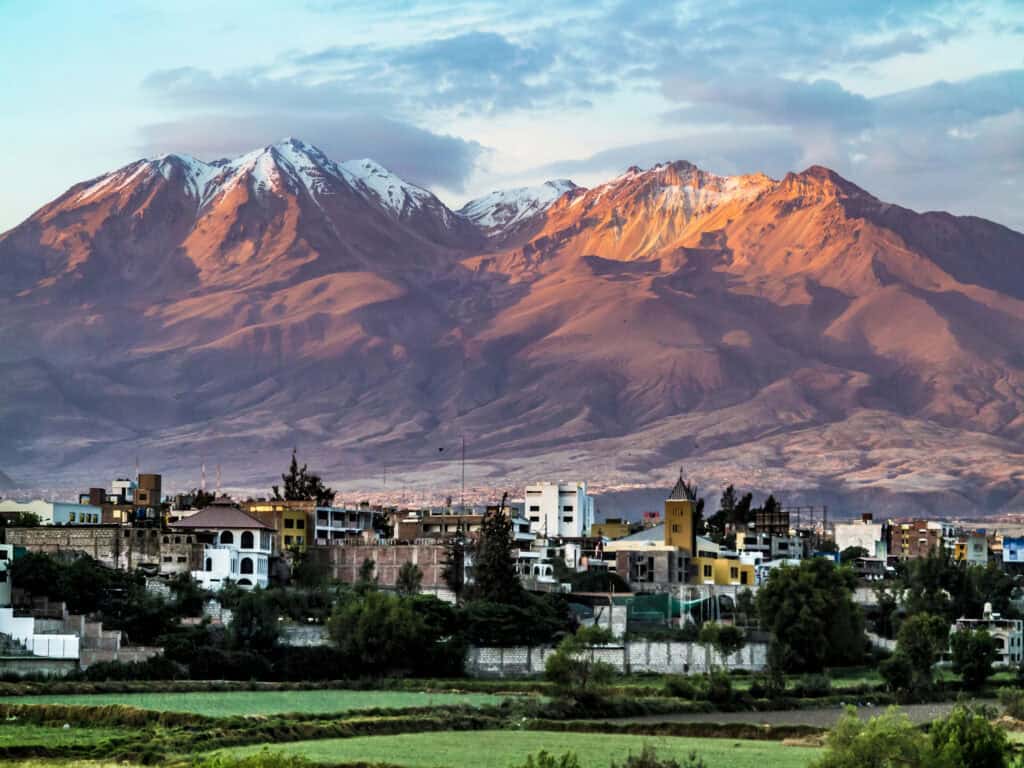
Known as the White City of Peru, Arequipa has a historic center built from white volcanic stone and backed by Volcán Misti. It gives the city a look and atmosphere that feels completely different from anywhere else in Peru.
Compared to Lima, Arequipa feels calmer and easier to enjoy. Compared to Cusco, it feels less touristy and less chaotic. You can walk around the historic center, eat well, visit Santa Catalina Monastery, and slow down for a few days.
There are also plenty of things to do in Arequipa beyond the city itself. Colca Canyon from Arequipa is one of the most popular trips, but Ruta del Sillar and even Volcán Misti are also within reach.
If you only planned one night here, you may want to change that.
Is Arequipa Peru Worth Visiting?
Arequipa Peru is definitely worth visiting, especially if you want to experience a different side of the country beyond places like Cusco or Machu Picchu. The city feels calmer, cleaner, and easier to explore, with a beautiful historic center built from white volcanic stone and views of Volcán Misti in the background.
One of the biggest reasons to visit Arequipa is the balance it offers. You can spend your days walking through the historic center, visiting places like Santa Catalina Monastery, and enjoying some of the best food in Peru, without the crowds or fast pace of other destinations.
At the same time, there are plenty of things to do in Arequipa outside the city. Day trips like Colca Canyon, Ruta del Sillar, and even hiking Volcán Misti make it a strong base for exploring the region.
For many travelers, Arequipa ends up being more than just a stop on the route. It is a place where you can slow down, enjoy the city, and still have access to some of the best experiences in southern Peru.
How Many Days Do You Need in Arequipa?
I would recommend at least 4 days in Arequipa if you have the time. This gives you enough space to enjoy the city and still see more of the area around it. Arequipa is better when you do not rush it.
A good balance is 2 days for the city itself. That gives you enough time to do the main activities, walk around, and see the most important places without turning it into a packed schedule.
The other 2 days are worth keeping free for day trips in the area around Arequipa. This makes your visit feel more complete, especially because some of the best experiences are outside the city.
Best Things to Do in Arequipa
Explore the Plaza de Armas
The Plaza de Armas is the heart of Arequipa and one of the first places you will probably see. It is surrounded by white buildings, palm trees, cafés, and the large cathedral facing the square. It is a good place to start and get a feel for the city.
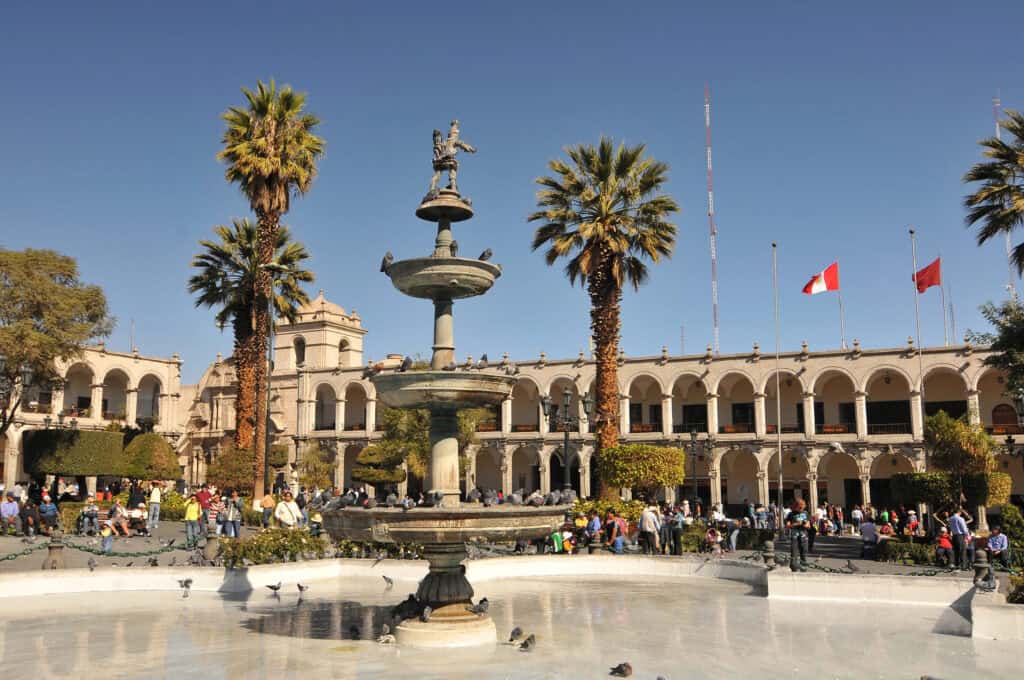
During the day, the square is busy with locals, tourists, and people relaxing on the benches. At night, the lights make it feel different again and the atmosphere becomes more lively. It is worth passing through more than once.
There are also several rooftop restaurants and bars around the square. Even if you do not eat there, the views over the plaza and toward the volcanoes can be worth it.
This is also one of the easiest areas to book tours. Around the plaza, you will find many tour agencies offering trips to places like Colca Canyon, Ruta del Sillar, and Volcán Misti.
Visit the Santa Catalina Monastery
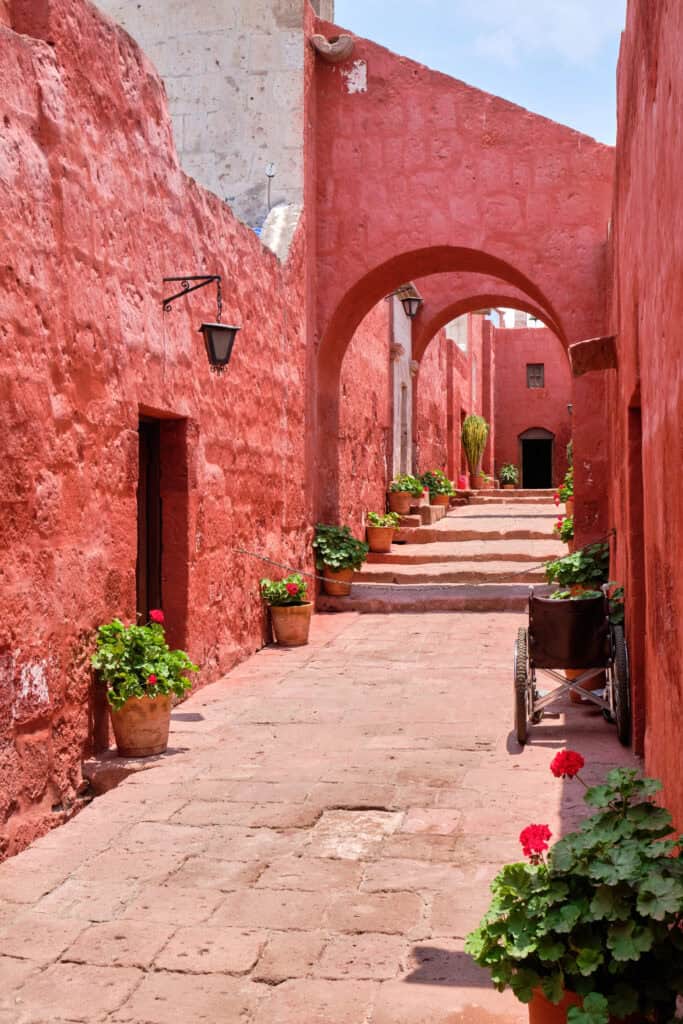
If there is one place you should not skip in Arequipa, it is the Santa Catalina Monastery. This huge monastery feels like a small city inside the city, with narrow streets, colorful walls, quiet courtyards, and hidden corners everywhere.
It is honestly one of the most impressive places I visited in Peru. The bright colors, old architecture, and peaceful atmosphere make it feel completely different from the busy streets outside. You can easily spend a few hours here just walking around.
The entrance fee is around 40 soles, which I think is absolutely worth it. If you only choose one paid attraction in Arequipa, make it this one.
See the Basilica Cathedral of Arequipa
The Basilica Cathedral is one of the most recognizable buildings in Arequipa and impossible to miss when you visit the Plaza de Armas. It stretches across almost the entire side of the square and stands out with its white stone exterior.
From the outside, it already looks impressive. But if you are interested, you can also go inside or join a short tour to learn more about its history and see parts of the museum.
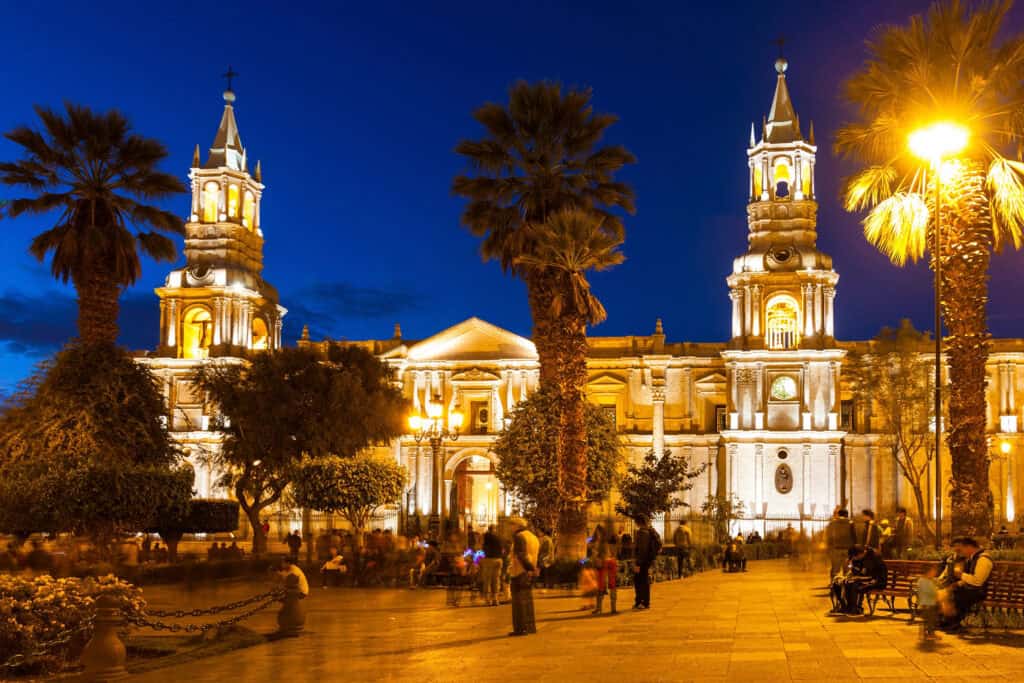
Even if you do not go in, it is worth stopping for a moment. The cathedral is one of the landmarks that gives Arequipa its classic look.
Walk Around the Historic Center
The historic center is one of the best parts of Arequipa. You do not need a strict plan here. Just walking around is already worth it.
The streets are full of white volcanic stone buildings, old churches, small shops, cafés, and local restaurants. It feels clean, calm, and easy to explore on foot.
This is also where Arequipa shows its character the most. Take your time, turn into smaller streets, and do not only stay around the Plaza de Armas.
Visit Yanahuara Viewpoint
Yanahuara Viewpoint is one of the most popular stops in Arequipa, and you will usually visit it as part of a city tour. It is a quick stop, but definitely worth it.
From here, you get one of the best views of Volcán Misti, especially on a clear day. The viewpoint itself has the famous white stone arches, and the small square around it has a nice local atmosphere.
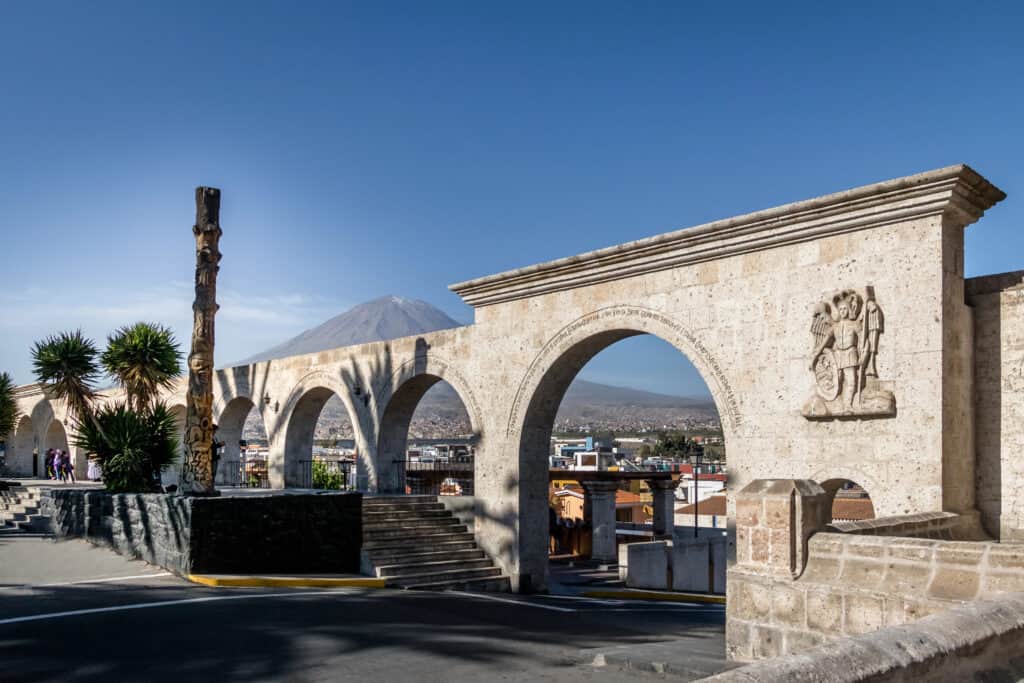
You will also find plenty of souvenir shops and street vendors here. One thing worth trying is the traditional local ice cream they sell around the square.
Visit Mundo Alpaca
Mundo Alpaca is a nice and easy stop in Arequipa, especially if you want to see alpacas up close without leaving the city. It is not a big attraction, but it is worth adding if you have some extra time.
You can learn a bit about alpaca wool, traditional weaving, and how the wool is processed. There are also alpacas and llamas on-site, which makes it a fun short visit.
This is also often included in city tours, usually together with Yanahuara Viewpoint. So if you book a city tour, there is a good chance you will visit both in one trip.
It is close enough to the historic center to visit without much effort. I would not plan a whole day around it, but as a quick stop between other places, it is definitely worth it.
Best Day Trips from Arequipa
Colca Canyon Day Trip
A Colca Canyon day trip is one of the most popular tours from Arequipa. It is the easiest way to see the canyon if you do not want to change hotels or add an overnight stop to your route. Just keep in mind that it is a very long day.
Most tours leave Arequipa extremely early, often around 3:00 or 4:00 in the morning. The drive takes several hours, but you usually stop along the way for viewpoints, small villages, breakfast, and sometimes hot springs depending on the tour.
The main highlight is seeing Colca Canyon itself. The canyon is huge and feels completely different from the cities in Peru. You get dry landscapes, deep valleys, small mountain villages, and if you are lucky, condors flying above the canyon.
One thing to know is that a day trip is mostly about viewpoints and short stops. You normally do not hike deep into the canyon on a standard day tour. Most of the walking is easy, so this trip is more about seeing the area than doing a serious hike.
The altitude is also important. Some routes go up to very high points, around 4,900 meters above sea level. That is much higher than Arequipa, so take it easy, drink water, and do not ignore headaches or dizziness.
Before booking, always check what is included. Some tours do not include the Colca Canyon tourist ticket, which is usually around 70 soles. Food, hot springs, or extra stops may also be separate depending on the agency.
The biggest downside is the travel time. You spend many hours in the bus, and the day can feel rushed. But if you only have limited time in Arequipa, a Colca Canyon day trip is still a good way to see one of the most impressive places in southern Peru.
If you book through the link below, I may earn a small commission at no extra cost to you.
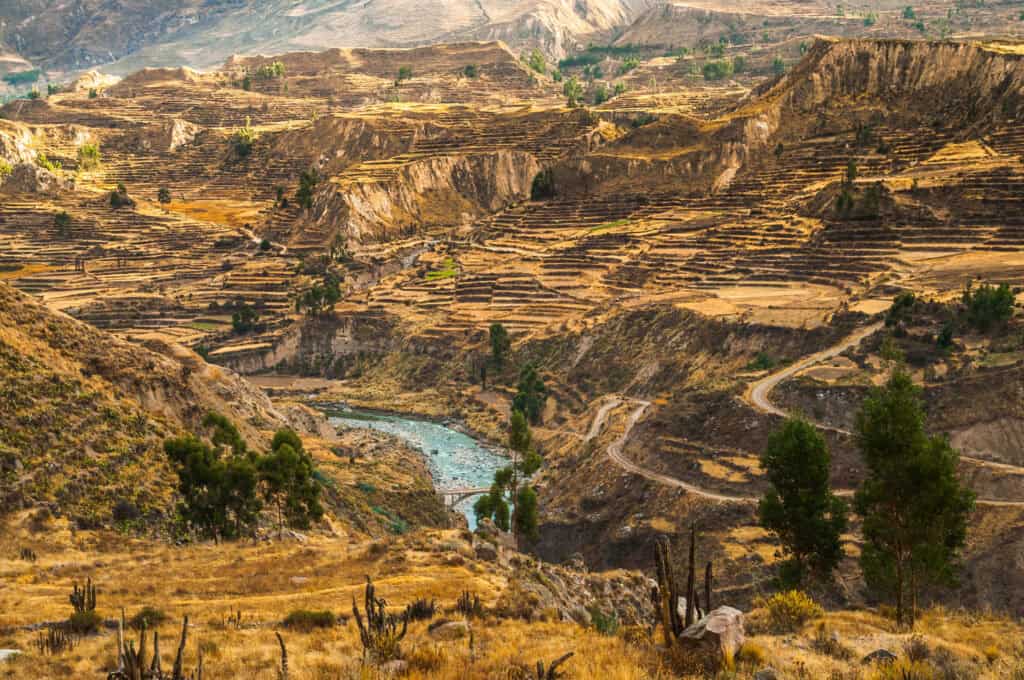
Colca Canyon Overnight Trip
If you have the time, the overnight Colca Canyon trip is the better option. It gives you a much more complete experience and lets you see more than just the main viewpoints.
Instead of spending most of the day in a bus, you have more time to explore the canyon itself. You can visit small villages, spend more time in nature, and really get a better idea of how massive the canyon is.
Most overnight tours include a hike down into the canyon on the first day. You usually stay overnight in a small lodge or oasis-style accommodation at the bottom, then hike back up early the next morning.
The hike can be challenging. Depending on the route, you can expect several hours of walking each day, and the climb back up is steep and tiring. This option is much more active than the normal day trip.
The biggest advantage is that it feels less rushed. You are not constantly getting on and off the bus, and you get to experience the canyon from inside the valley instead of only from above.
The downside is that it takes two full days and more energy. If your Peru itinerary is already tight, fitting it in can be difficult unless you cut time somewhere else.
If you enjoy hiking and want a more memorable experience, the overnight trip is usually the better choice. If you mainly want to see the canyon without changing your plans too much, the day trip is easier.
Salinas and Aguada Blanca National Reserve
Salinas and Aguada Blanca National Reserve is another great day trip from Arequipa, especially if you want to see a wilder side of the region. It is less about city sights and more about open landscapes, volcanoes, salt flats, and wildlife.
The reserve is home to animals like vicuñas, alpacas, llamas, and many birds. If the weather is good, the views can be very impressive, with wide empty areas and volcanoes in the background.
One of the main highlights is the salt lagoon, which can look completely different depending on the season. Sometimes it is dry and white, while other times there is water and you can see reflections.
This trip is usually easier than hiking Volcán Misti or doing the overnight Colca Canyon trek. It is a good option if you want a full-day tour from Arequipa, but do not want something too physically demanding.
Ruta del Sillar
Ruta del Sillar is an easy half-day trip from Arequipa and a good option if you want to see something different without spending the whole day away from the city.
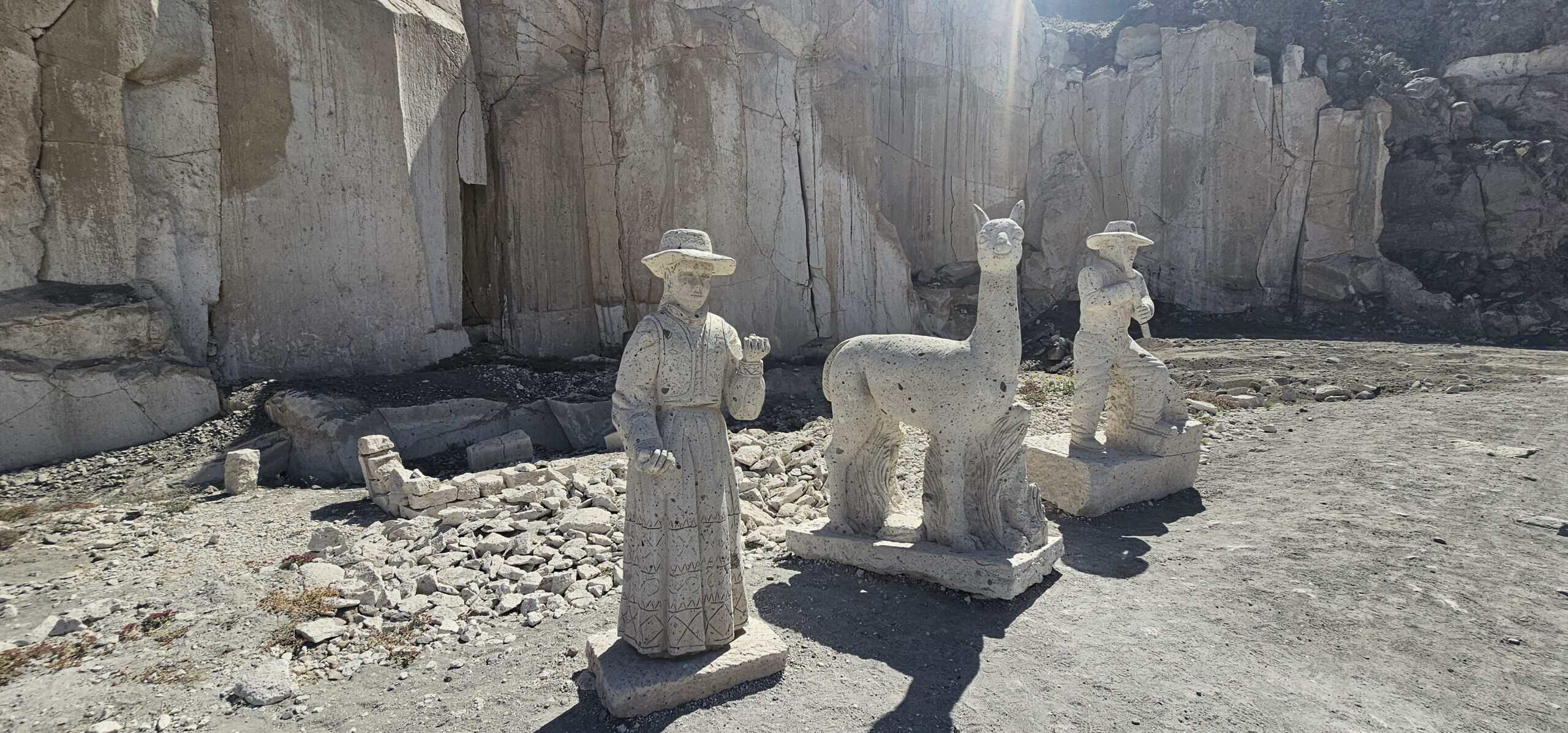
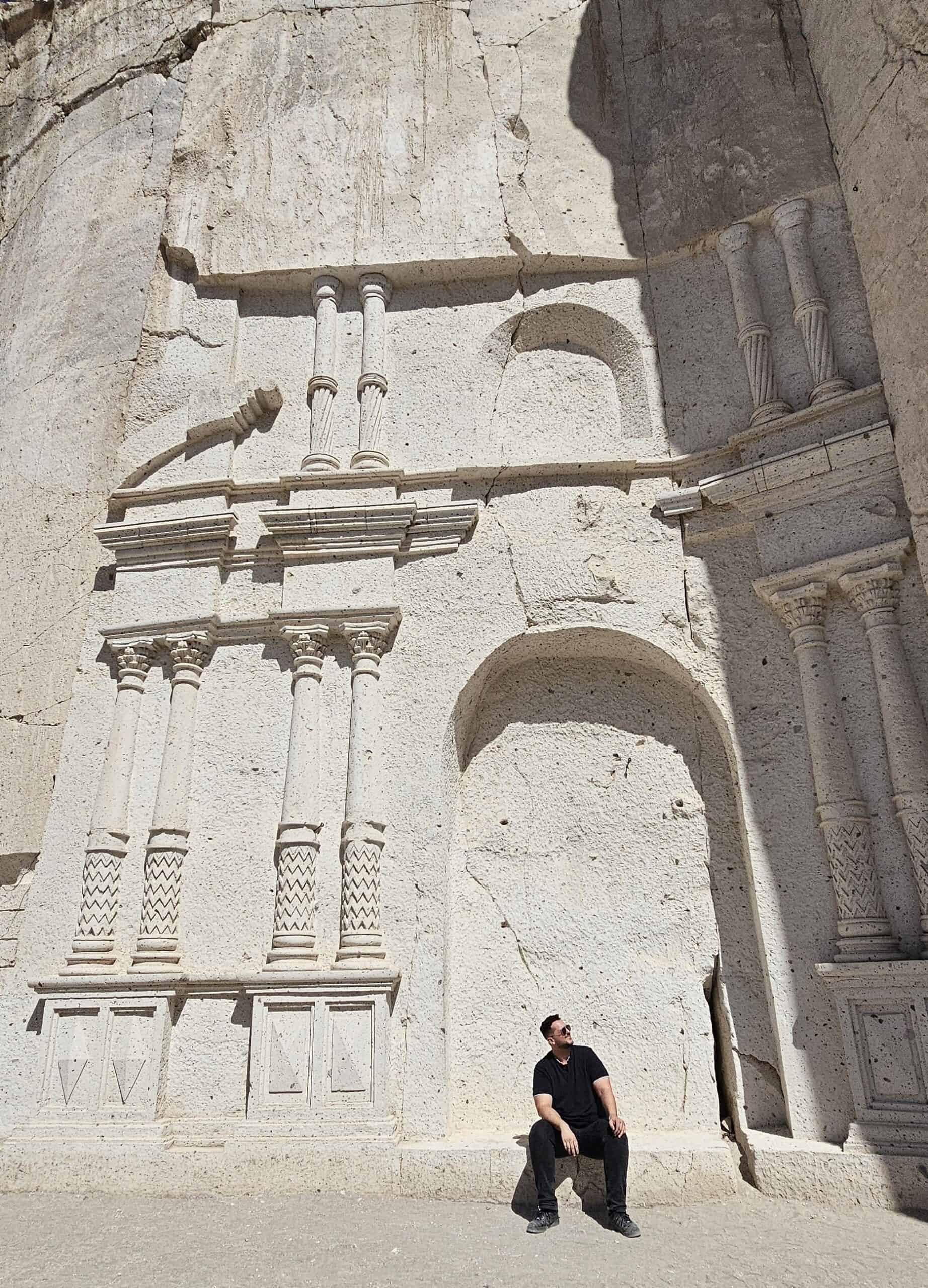
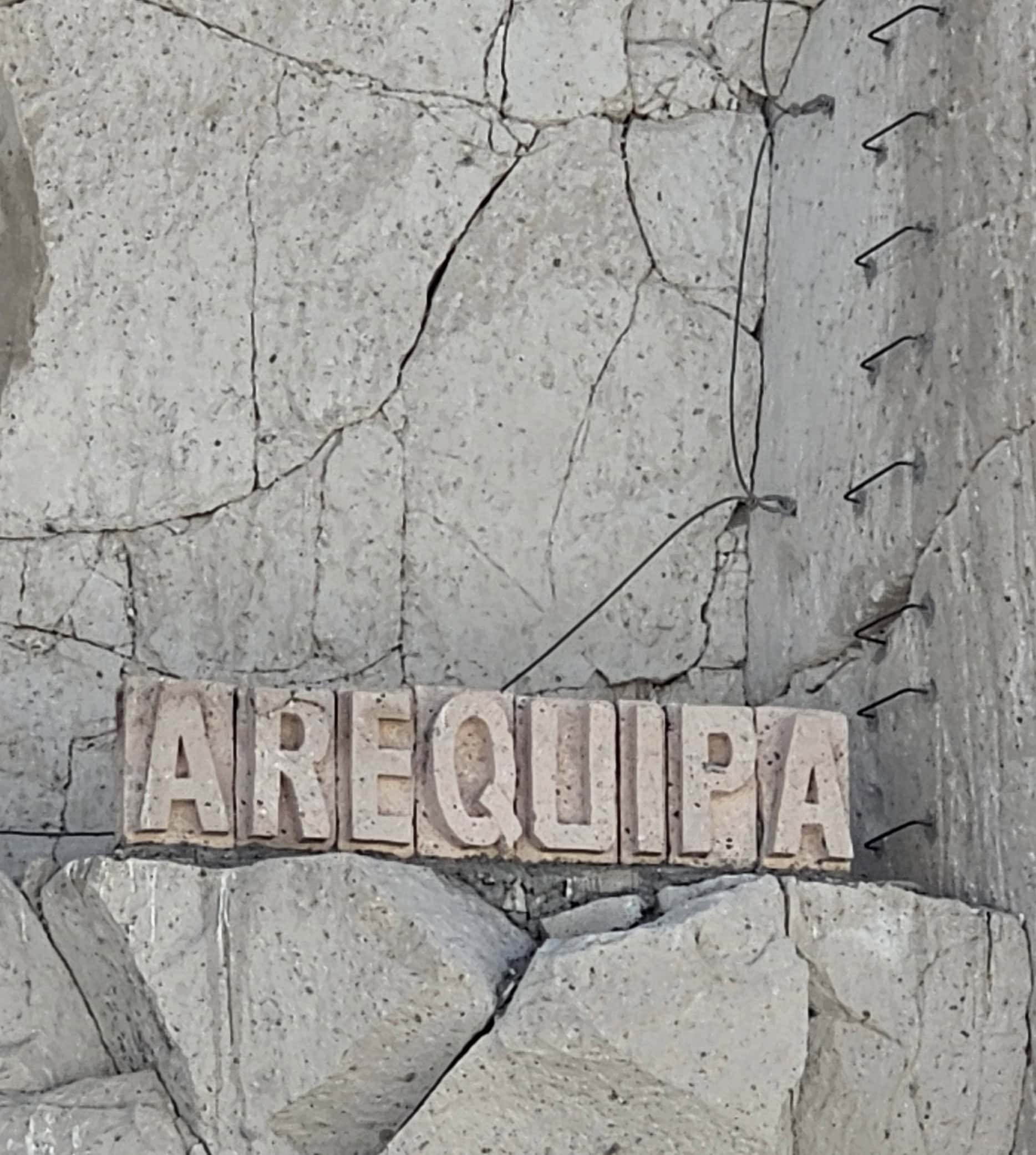
The tour takes you to the old stone quarries outside Arequipa, where the city’s famous white volcanic stone comes from. This stone is called sillar, and it is the reason Arequipa is known as the White City.
What makes the place interesting is that you do not only see the quarries. You also see carved walls, narrow canyon-like paths, and large stone formations shaped by workers and artists.
It is not a difficult tour and there is usually not much walking involved. That makes it a good choice if you want a relaxed activity, especially after a long bus ride or before a bigger trip like Colca Canyon.
Because it only takes a few hours, Ruta del Sillar is easy to combine with other things in Arequipa on the same day.
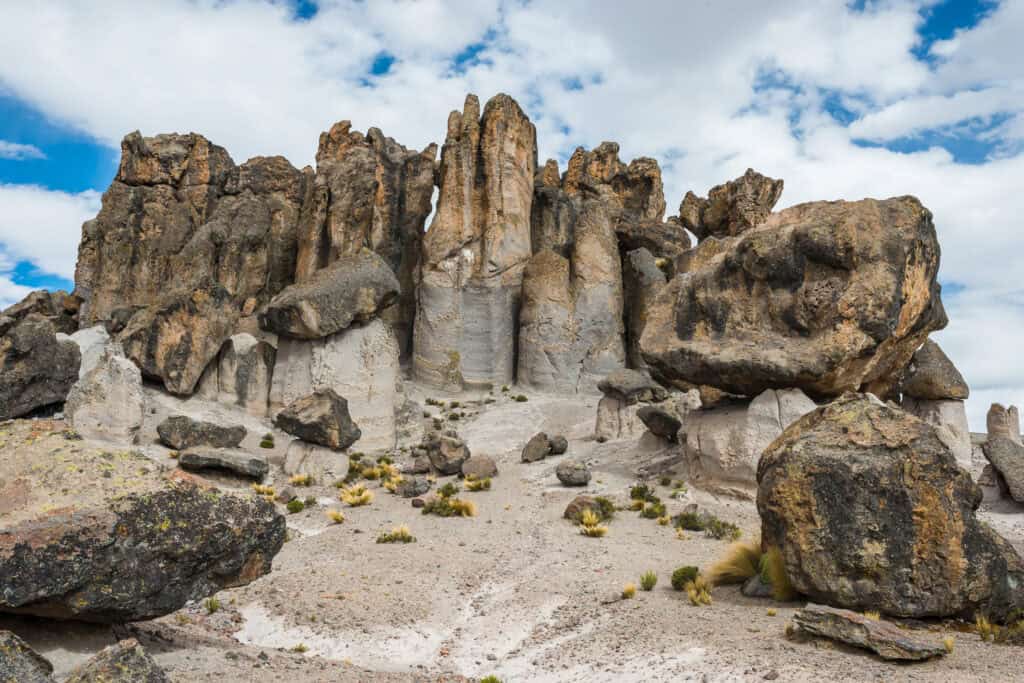
Bosque de Piedras de Imata: Arequipa’s Stone Forest
Bosque de Piedras de Imata is one of the more unique day trips from Arequipa. It is not as famous as Colca Canyon, but that is also part of why it feels interesting.
The area is known for its strange rock formations that look like a natural stone forest. Over time, wind and weather shaped the rocks into towers, walls, and unusual shapes.
This is a good trip if you want something quieter and less touristy. It is more about walking around, taking in the landscape, and seeing a different side of the Arequipa region.
The altitude can be high here, so bring warm clothes and take it easy. Even if the sun is out, the wind can make it feel cold.
I would choose this trip if you already have extra time in Arequipa or want something different from the standard tours.
Volcán Misti: Hiking Arequipa’s Iconic Volcano
Volcán Misti is the volcano you will see almost everywhere in Arequipa. With its perfect shape rising behind the city, it is one of the most recognizable views in the area.
If you are looking for adventure, hiking Volcán Misti is one of the most challenging things you can do from Arequipa. Most tours take 2 days, with camping on the mountain overnight before reaching higher viewpoints or the summit the next day.
This is not an easy hike. The altitude is high, the air gets thinner, and the terrain can be steep and dusty. Even people in good shape can struggle because parts of the hike go above 5,000 meters.
The reward is the experience and the views. On clear days, you can look over Arequipa, nearby volcanoes, and the dry landscapes around the city.
I would only recommend this if you are properly acclimatized and enjoy difficult hikes. It is one of the most memorable adventures near Arequipa, but definitely not for everyone.
Where to Stay in Arequipa
Where you stay in Arequipa can make a big difference, especially if you only have a few days. I would recommend staying close to the historic center so you can walk to most restaurants, cafés, and main attractions.
The Historic Center is the best area for most travelers. You will be close to Plaza de Armas, Santa Catalina Monastery, rooftop restaurants, and many tour agencies. It is the most convenient place to stay if it is your first time in Arequipa.
Yanahuara is a quieter area with nice views and a more local feel. It is still close enough to the center by Uber, but feels a bit more relaxed.
Cayma is another good option and is known for nicer hotels, restaurants, and a more modern feel. It can be a good choice if you want a little more comfort.
If you are on a tighter budget, there are also plenty of hostels and cheaper hotels near the center. For most people, staying central is the easiest and best option.
How to Get to Arequipa
Flying to Arequipa
Flying is the fastest and easiest way to get to Arequipa, especially if you are coming from Lima. The flight usually takes around 1.5 hours, which saves a lot of time compared to the long bus ride.
Arequipa has its own airport, Rodríguez Ballón International Airport, located a short drive from the city center. From the airport, you can take a taxi or use a ride app to get to your hotel.
This is a good option if you have limited time in Peru or want to avoid spending a full day or night on the road. It can also be useful if you want to add Arequipa and Colca Canyon without making your itinerary feel too rushed.
Many travelers start their Peru trip in Lima before flying or taking the bus south. If that is your first stop, read my Lima Travel Guide to plan your time there.
Taking the Bus to Arequipa
Taking the bus to Arequipa is a good option if you are traveling on a lower budget or prefer to save money on domestic flights. It is also a practical choice if you are coming from places like Paracas or Huacachina, since both are located between Lima and Arequipa.
From Lima, the bus ride is long and usually takes around 15 to 17 hours depending on the operator and route. From Paracas or Huacachina, the journey is shorter and easier to manage.
Peru has some well-organized bus companies, and I personally found operators like Cruz del Sur and Peru Hop reliable. Peru Hop is more tourist-focused and flexible, while Cruz del Sur feels more like a comfortable long-distance coach service.
If you pay a little extra, you can often get much better seats with more legroom that recline far back. On long overnight rides, this can make a huge difference and help you save on accommodation for a night.
Getting Around Arequipa
Getting around Arequipa is quite easy, especially if you stay near the historic center. Many of the main places in the city are close enough to walk between, so you do not need transport all the time.
For longer distances, Uber is the best option. It is simple, usually affordable, and useful for getting to places like the airport, bus station, Yanahuara, Cayma, or Mundo Alpaca.
You can also use regular taxis, but I prefer ride apps because the price is clear before you get in. This avoids awkward price discussions, especially if you do not speak much Spanish.
If you book a city tour or day trip, transport is usually included. For most travelers, walking + Uber + organized tours is enough to get around Arequipa without stress.
Best Time to Visit Arequipa
Dry Season
The best time to visit Arequipa is during the dry season, which usually runs from May to October. During these months, you will get more sunny days, clearer skies, and better views of Volcán Misti and the other mountains around the city.
This is also the best time for day trips like Colca Canyon, Ruta del Sillar, or hiking Volcán Misti, because there is less chance of rain and roads are usually in better condition.
Even during the dry season, mornings and evenings can feel cold, especially if you head into higher areas. During the day, the sun can feel strong, so it is best to dress in layers and bring sunscreen.
Arequipa is one of the driest cities in Peru, so even outside the dry season it usually gets less rain than places like Cusco. That makes it a good destination almost year-round.
Rainy Season
The rainy season in Arequipa usually runs from November to April. Arequipa is still quite dry compared to other places in Peru, so this does not mean it rains all day every day.
You can still visit during these months, but the weather can be less predictable. Some days are sunny, while other days may bring clouds, rain, or less clear views of the volcanoes.
For city sightseeing, the rainy season is usually not a big problem. For day trips and hikes, it is more important to check the weather and book with a reliable tour agency.
One thing to take seriously is bus travel during the rainy season, especially if you are traveling to or from Cusco. Landslides are more common in the mountains during this period, and buses can sometimes be delayed or cancelled.
If you are short on time, flying can be the safer option during the rainy season. It costs more, but it can save you a lot of stress if road conditions become difficult.
Is Arequipa Safe?
Arequipa generally feels safe for travelers, especially around the historic center, Plaza de Armas, Yanahuara, and the main tourist areas. Compared to Lima, it also feels calmer and easier to walk around.
That said, you still need normal common sense. Watch your phone, do not walk around with too much cash, and be careful in quiet streets late at night.
For longer distances, especially at night, I would use Uber instead of walking. It is cheap, easy, and avoids unnecessary risk.
Most travelers will not have any problems in Arequipa, but like anywhere in Peru, stay aware of your surroundings and do not get too comfortable.
Practical Travel Tips for Arequipa
Altitude in Arequipa
Arequipa sits at around 2,300 meters (7,500 feet) above sea level. For many travelers, this is high enough to feel shortness of breath, mild headaches, or lower energy when arriving.
The good thing is that the altitude in Arequipa is lower than Cusco, so for many people it can be a nice place to adjust before going deeper into the Andes.
Still, take it easy on your first day. Drink plenty of water, avoid heavy meals or too much alcohol, and do not plan anything too active right away.
This is especially important if you plan to do trips like Colca Canyon or Volcán Misti, because those tours can take you much higher very quickly.
What to Pack for Arequipa
For Arequipa, it is best to pack layers. The days can feel warm and sunny, but mornings and evenings can be much colder, especially if you are going on day trips outside the city.
Bring comfortable walking shoes, because you will probably walk a lot around the historic center. If you plan to do Colca Canyon or Volcán Misti, proper hiking shoes are a much better choice.
Sunscreen, sunglasses, and a hat are also useful. The sun can feel strong because of the altitude, even when the temperature does not feel extremely hot.
I would also bring a light jacket or sweater, a small daypack, and a refillable water bottle. During the rainy season, add a light rain jacket, especially if you are planning tours or bus trips.
Arequipa or Cusco: Which Should You Visit?
If you have enough time, I would honestly visit both. They are very different cities and each offers something unique.
Cusco feels busier, more touristy, and more focused on history, Inca culture, and trips like Machu Picchu and the Sacred Valley. It has a lot to do, but it can also feel more crowded and intense.
Arequipa feels calmer, cleaner, and more relaxed. It is a city where you can slow down a bit, enjoy the food, and use it as a base for places like Colca Canyon or Volcán Misti.
If you are mainly interested in Inca history and famous highlights, Cusco is probably the better choice. If you want a more laid-back city with great food and volcano views, Arequipa can be the better fit.
If you are planning to visit Cusco too, make sure to read my Cusco Travel Guide for the best things to do, where to stay, and practical travel tips.
Most travelers visiting Cusco also plan a trip to Machu Picchu, which is one of the main highlights of Peru. If you are planning to go, read my complete Machu Picchu Guide for routes, tickets, and practical tips.
Final Thoughts on This Arequipa Travel Guide
Arequipa is often seen as just a stop between Lima, Cusco, or Puno, but it deserves more than that. This is not a city you should rush through if you have the time.
What makes Arequipa special is the mix. You get a beautiful historic center, strong local food culture, nearby volcanoes, and easy access to some of the best day trips in southern Peru.
It also feels easier to enjoy than some of Peru’s bigger travel hubs. The city is calmer than Lima and less intense than Cusco, which makes it a good place to slow down for a few days.
If you can, I would give Arequipa at least 4 days. Spend part of your time in the city and keep some space for day trips around the region.
For me, Arequipa is one of those places that may not always be the main reason people come to Peru, but often ends up becoming one of the places they remember most.
If you are still planning your full trip, you can also read my Peru Travel Guide for a broader overview of routes, seasons, safety, transport, and travel tips.