- Introduction
- What Is Rainbow Mountain?
- Where Is Rainbow Mountain in Peru?
- How to Get to Rainbow Mountain
- My Experience Hiking Rainbow Mountain
- Rainbow Mountain Altitude and Difficulty
- How to Prepare for Rainbow Mountain
- What to Pack for Rainbow Mountain
- Best Time to Visit Rainbow Mountain
- Horse Rentals at Rainbow Mountain
- Red Valley: Should You Add It?
- Rainbow Mountain Travel Tips
- Final Thoughts on Visiting Rainbow Mountain
Introduction
The Rainbow Mountain in Peru has become one of the most popular day trips from Cusco, and after doing the hike myself, I completely understand why. The mountains looks unreal, the colors are fantastic, and standing high in the Andes is an experience that stays with you for life.
But what many people do not realize before visiting Rainbow Mountain is that this is not an easy walk.
The Rainbow Mountain hike is relatively short compared to many other hikes in Peru, but the altitude changes everything. At over 5,000 meters above sea level, around 16,400 feet, even simple walking starts to feel exhausting. For me, it was honestly one of the hardest hikes I have ever done. Not because of the distance, but because every step felt heavier the higher we climbed.
You see alot of people struggeling before reaching the top, especially those who underestimated the altitude or arrived unprepared. This is definitely not one of those hikes where you can just show up without thinking about it.
That is exactly why preparing properly for the hike matters so much.
In this Rainbow Mountain Peru guide, I will share everything I learned from my own experience, including how to get there from Cusco, how difficult the hike really is, what to pack, how to deal with the altitude, the best time to visit, and important mistakes to avoid before doing the hike yourself.
What Is Rainbow Mountain?
Why Is Rainbow Mountain Famous?
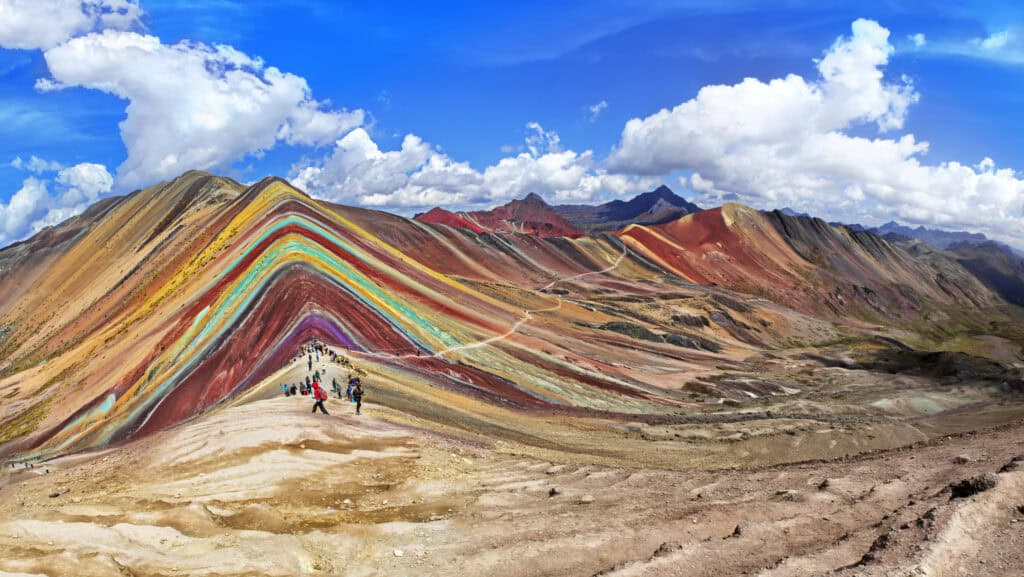
Rainbow Mountain, also known as Vinicunca or Montaña de Siete Colores, became famous because of the natural colored layers that run across the mountain. These colors come from different minerals in the soil and rock. Over time, they created the red, yellow, green, and earthy tones that give the mountain its rainbow-like appearance.
But Rainbow Mountain is not only about the colors. The hike itself is a big part of what makes the trip special.
You walk through a remote part of the Andes where almost nothing grows except small patches of grass. It feels wild, quiet, and far away from everything.
By the time you reach the viewpoint, you get the famous view of Rainbow Mountain, but also a wide view over the surrounding Andes. That mix of colors, altitude, and the feeling of being so deep in the mountains is what makes Rainbow Mountain one of the most popular day trips from Cusco.
How High Is Rainbow Mountain?
The top of Rainbow Mountain sits at around 5,200 meters above sea level, which is about 17,060 feet.
That altitude is the main reason the hike feels so difficult. The trail itself is not extremely long, but walking at this height is completely different from hiking at lower elevation. Even if you are fit, you may feel short of breath much faster than usual.
Is Rainbow Mountain Worth Visiting?
Absolutely yes.
Even though the Rainbow Mountain hike is physically challenging, the reward at the end makes it completely worth it. Reaching the viewpoint feels like a real achievement, and the view at the top is something you will probably remember for a very long time.
As long as you prepare properly and understand that this is not an easy hike, visiting Rainbow Mountain is an experience I would absolutely recommend adding to your Peru itinerary.
Where Is Rainbow Mountain in Peru?
Distance From Cusco
Rainbow Mountain is located southeast of Cusco in the Peruvian Andes. The mountain sits roughly 100 kilometers (62 miles) away from the city, deep in a remote high-altitude area near the Ausangate region.
Even though the distance from Cusco may not look very far on a map, Rainbow Mountain is located in mountainous terrain far away from major towns or cities. That is why visiting it requires traveling deep into the Andes before reaching the starting point of the hike.
How to Get to Rainbow Mountain
Joining a Tour From Cusco
The easiest and most popular way to visit Rainbow Mountain is by joining a tour from Cusco. Most travelers choose this option because transportation, breakfast, lunch, and the entrance ticket are usually included.
If you book through the link below, I may earn a small commission at no extra cost to you.
There are also many tour companies in Cusco offering Rainbow Mountain tours, and you will see them everywhere around the historic center and Plaza de Armas. Prices can vary quite a lot depending on the company, group size, and what is included.
Another benefit of joining a tour is that you meet other travelers doing the same hike. This can make the experience more enjoyable, especially during the harder parts of the trail, because you are not walking completely alone.
Most tours leave very early in the morning, often around 3:00 to 4:00 AM, because the drive into the Andes takes several hours. After arriving near the trailhead, you start the Rainbow Mountain hike together with the rest of the group.
In my opinion, joining a tour is the best option for most people. The route is straightforward, you do not have to organize transportation yourself, and it makes the entire experience much easier, especially because of how remote the area is.
If you are still planning your stay in the city before the hike, you can also read my full Cusco travel guide for tips on where to stay, what to do, and how to prepare for high-altitude day trips from Cusco.
Visiting Rainbow Mountain Without a Tour
It is possible to visit Rainbow Mountain without joining a tour, but it takes much more planning and is not the option most travelers choose.
To do this, you first need to arrange transportation from Cusco toward the trail area, usually by combining buses, taxis, or a private driver. Because Rainbow Mountain is located in a remote part of the Andes, public transportation is less straightforward compared to other destinations around Cusco.
You also need to organize your own entrance ticket, food, timing, and return transportation. Since most people start the hike very early in the morning, doing everything independently usually means leaving Cusco extremely early or staying somewhere closer to the trailhead the night before.
The advantage of visiting without a tour is having more flexibility. You can move at your own pace, spend more time at the viewpoint, and avoid feeling rushed by a group schedule.
Still, unless you specifically prefer independent travel, I think joining a tour is the easier and more practical option for most people visiting Rainbow Mountain for the first time.
How Long the Full Day Takes
A full Rainbow Mountain tour usually takes around 12 to 15 hours in total, depending on traffic, weather conditions, and the pace of your group during the hike.
Most tours start extremely early in the morning, often between 3:00 and 4:00 AM, and many people only return to Cusco in the late afternoon or early evening.
Even though the actual Rainbow Mountain hike itself is relatively short, the long drive and high altitude make it feel like a very full and tiring day. By the time I got back to Cusco, I was completely exhausted.
Because of this, I would not recommend planning anything else for the same evening, especially if you are still adjusting to the altitude in Cusco.
My Experience Hiking Rainbow Mountain
What the Hike Actually Felt Like
Before doing the Rainbow Mountain hike myself, I had seen many photos and videos online, so I expected it to be hard. But honestly, it felt even harder than I imagined.
The biggest reason was the altitude.
The first part of the hike was not too steep. For the first 45 minutes or so, the trail felt quite manageable, and the height difference was not that extreme yet. But after that, the trail started going uphill, and that is where the hike became much harder.
From that point, it really felt like climbing up slowly instead of just walking. The last section was especially tough, with stairs near the end before reaching the viewpoint.
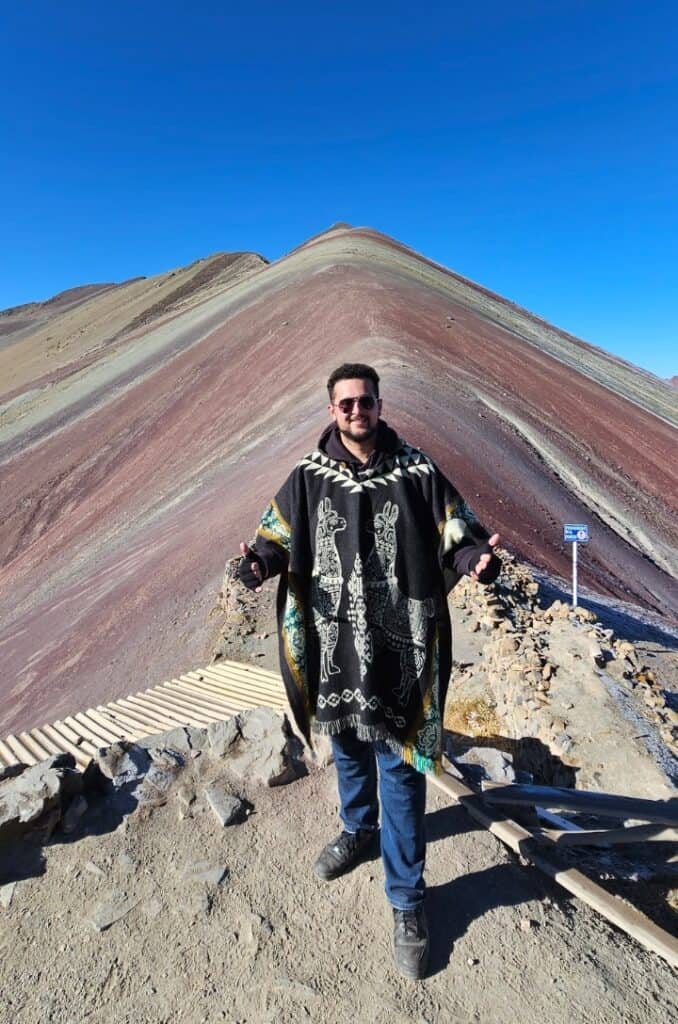
I remember taking a short break of about three minutes after every 100 steps because that is how tired I felt. Normally, that would sound unnecessary for a short hike, but at this altitude, your body reacts very differently.
By the time I reached the viewpoint, I was completely exhausted. But once I stood at the top and saw Rainbow Mountain in front of me, it felt 100% worth it.
Rainbow Mountain Altitude and Difficulty
How Difficult Is the Hike?
The Rainbow Mountain hike is difficult for most people, even if the route itself is not very technical.
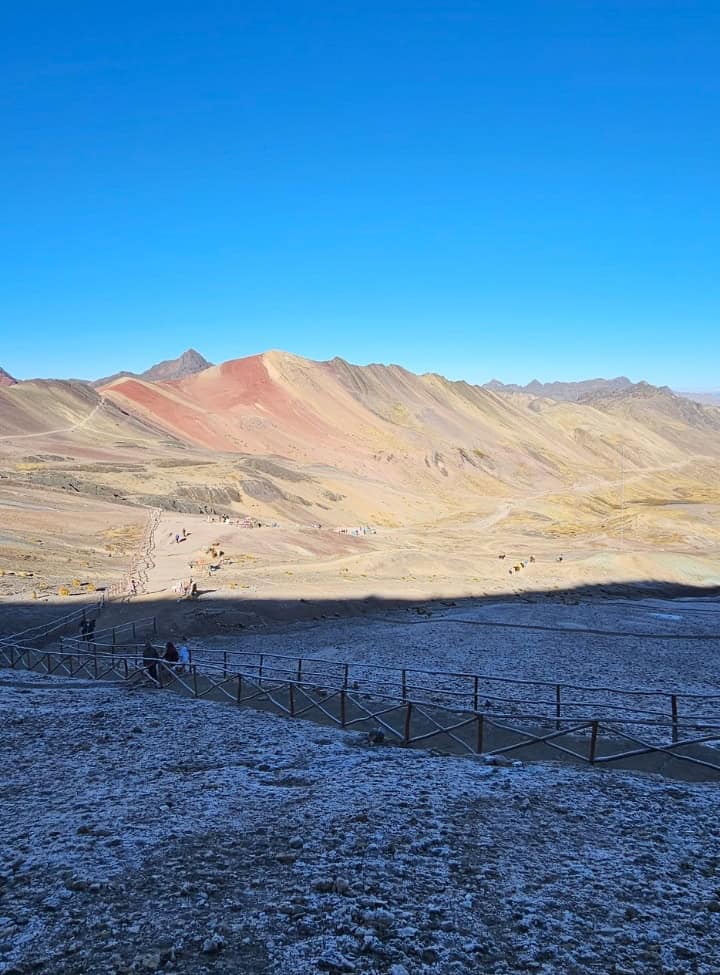
The hardest part is the uphill section near the end. This is where many people start taking more breaks, walking slower, or deciding to use a horse for part of the route.
You do not need to be an experienced hiker to reach the top, but you do need patience. Take it slow, listen to your body, and do not try to keep the same pace you would normally hike at lower elevation.
Can Beginners Do Rainbow Mountain?
Yes, beginners can do Rainbow Mountain, but it is not a hike you should underestimate.
You do not need climbing skills, but you do need to be okay with walking slowly, taking breaks, and feeling uncomfortable at times. During my hike, I saw many people stopping often to catch their breath, especially near the final uphill section.
So if you are a beginner, do not worry about being fast. Focus on reaching the viewpoint safely, even if that means stopping much more than usual.
Signs of Altitude Sickness
Because Rainbow Mountain sits at such a high altitude, many people experience at least some mild symptoms during the hike.
The most common signs of altitude sickness are headaches, dizziness, nausea, shortness of breath, fatigue, and feeling unusually weak while walking uphill. Some people also lose their appetite or feel pressure in their head.
During the hike, it is important to listen to your body. Feeling tired is normal, but if you start feeling seriously dizzy, sick, or unable to continue safely, it is better to stop and rest instead of pushing too hard.
Staying hydrated, eating properly, and avoiding alcohol before the hike can also help you feel better during the climb.
How to Prepare for Rainbow Mountain
Spend Time in Cusco First
Do not plan Rainbow Mountain for your first full day in Cusco. Even if you feel fine when you arrive, the hike can hit much harder than expected once you start climbing.
A better option is to place Rainbow Mountain near the end of your stay in Cusco. Spend your first days exploring the city, visiting nearby ruins, or doing easier day trips before taking on one of the highest hikes in the area.
This also gives you more time to understand how your body reacts to Cusco before going even higher into the Andes. If you are already feeling tired, lightheaded, or unwell in the city, it is better to wait before doing Rainbow Mountain.
What to Eat Before the Hike
Eating properly before the Rainbow Mountain hike makes a bigger difference than many people expect.
Because the tour starts extremely early, most people are still half asleep when leaving Cusco, but it is important to eat something before starting the hike. Many tours include a simple breakfast before arriving at the trailhead, which usually helps a lot.
I would avoid eating very heavy or greasy food the night before. Your body is already working harder because of the altitude, so keeping meals relatively light and easy to digest feels much better during the hike.
It is also smart to bring extra snacks with you. Things like chocolate, fruit, protein bars, or nuts are useful for quick energy during the harder uphill sections. Even short breaks with a small snack and water helped me recover a bit before continuing.
Hydration and Coca Tea
Staying hydrated is extremely important before and during the Rainbow Mountain hike. Bring enough water with you and try to drink regularly, even if the weather feels cold.
Coca tea is also very common in Cusco and many travelers drink it before high-altitude hikes. It is not a magic fix, but it can help you feel a bit more comfortable before the climb.
Personally, I drank coca tea before and after the hike, and it felt like a nice part of preparing for the day.
What to Pack for Rainbow Mountain
Warm Clothing Layers
The weather at Rainbow Mountain can feel very cold, especially early in the morning before the hike starts. It can also get very windy near the viewpoint, so wearing enough layers is important.
Layers make it easier to adjust while hiking. You may feel cold at the start, warm while walking uphill, and cold again once you stop at the top.
I personally wore a poncho during the hike, and honestly, it felt perfect. It was warm, comfortable, and helped protect me from the wind.
Hiking Shoes
Good hiking shoes make a huge difference during the Rainbow Mountain hike.
I actually made the mistake of doing the hike in normal sneakers. Even though I still reached the top, I ended up with several blisters afterward, and I definitely noticed the lack of grip and support during the steeper parts of the trail.
The path can be uneven, dusty, muddy, or slippery depending on the weather, so proper hiking shoes give you much better stability and confidence while walking uphill.
If you have hiking shoes available, I would strongly recommend wearing them instead of regular sneakers. Your feet will probably thank you later.
Water and Snacks
Even if your tour includes breakfast and lunch, bring your own water and snacks for the hike itself.
Small snacks like chocolate, protein bars, nuts, or fruit are useful during short breaks, especially before the final uphill section. You do not need a lot, but having something quick to eat can make a big difference when your energy drops.
I was happy I had snacks with me, because even a short break with water and something small helped me continue climbing.
Sunscreen and Sunglasses
Even though Rainbow Mountain can feel cold, the sun at this altitude is extremely strong.
Because you are hiking so high in the Andes, it is very easy to get sunburned without noticing it immediately, especially on your face and neck. I would definitely recommend applying sunscreen before starting the hike and bringing it with you if possible.
Sunglasses are also very useful during the hike. The sunlight can feel intense, especially during clear weather when the open surroundings reflect a lot of light.
Many people focus only on the cold before visiting Rainbow Mountain, but the sun exposure up there is honestly just as important to prepare for.
Cash and Toilet Paper
Bring some cash with you before starting the Rainbow Mountain hike. There are toilets at two points during the trip, but you usually have to pay to use them, and toilet paper may cost extra or may not be available.
Because of this, it is smart to bring your own toilet paper or tissues, just in case.
Best Time to Visit Rainbow Mountain
Dry Season vs Rainy Season
The best time to visit Rainbow Mountain is during the dry season, which runs from May to September.
During these months, you have a better chance of clear weather and a dry trail. This matters a lot, because clouds, fog, or rain can block the view at the top.
In the rainy season, especially from December to March, the trail can become muddy and slippery. The hike is already tough enough, so bad weather can make the day feel even harder.
I would try to plan Rainbow Mountain in the dry season if your Peru route allows it.
Horse Rentals at Rainbow Mountain
How Horse Rentals Work
During the Rainbow Mountain hike, local people offer horse rentals for travelers who are struggling or do not want to walk the full route.
The horse can take you most of the way up, which saves a lot of energy during the uphill section. However, it does not take you all the way to the main viewpoint.
Near the end, you still need to walk the final part yourself, including the stairs toward the top. For some people, this makes the hike much more manageable without skipping the experience completely.
Typical Prices
The price for a horse rental at Rainbow Mountain can vary depending on the season and how far you want the horse to take you.
In general, most people pay somewhere between 80 and 120 Peruvian soles for the ride uphill. Sometimes you may be able to negotiate the price slightly, especially during quieter days.
Horse rentals are usually paid in cash, so make sure to bring enough Peruvian soles with you before starting the hike.
Red Valley: Should You Add It?
What Is Red Valley?
Red Valley is an extra hiking area located near Rainbow Mountain that some travelers choose to visit after reaching the main viewpoint.
Instead of the colorful rainbow layers that Rainbow Mountain is known for, this area is covered in deep red landscapes created by minerals in the soil. From what I heard from other travelers during my trip, the views there are supposed to be really impressive and much quieter compared to the main Rainbow Mountain viewpoint.
I personally did not do the Red Valley section myself, mainly because I was already completely exhausted after reaching Rainbow Mountain. But if you still have enough energy left after the main hike, it sounds like it can be a very worthwhile addition to the day.
Not every tour includes Red Valley automatically, so it is worth checking beforehand if this is something you want to add to your trip.
Extra Time and Difficulty
Adding Red Valley to your Rainbow Mountain trip does require extra walking and energy, so it is something to think about beforehand.
From what I heard from other hikers, the extra route is not extremely difficult, but after already hiking to Rainbow Mountain, even a little more walking can feel much harder than expected.
I personally decided not to continue toward Red Valley because finishing the main hike already felt like enough for me that day.
So if you still feel strong after reaching the viewpoint, it could be a great addition. But if you are already tired or struggling with the altitude, skipping it is completely understandable.
Rainbow Mountain Travel Tips
Avoiding Crowds
The main viewpoint at Rainbow Mountain can get crowded, especially during the dry season.
The best way to avoid the biggest crowds is to choose a tour that leaves Cusco as early as possible. Most tours already start around 3:00 to 4:00 AM, but some companies leave even earlier and reach the trail before the larger groups.
Even with other hikers around, the experience still feels worth it. Once you start walking, people naturally spread out along the trail, so it does not feel crowded the entire time.
How Much Cash You Should Bring
I would recommend bringing some extra cash with you during the Rainbow Mountain hike, even if your tour already includes transportation and meals.
Along the trail and near the viewpoint, there are small local stands selling snacks, water, coca tea, coffee, and other drinks. A warm drink can be very nice after reaching the top, especially because it can be cold and windy there.
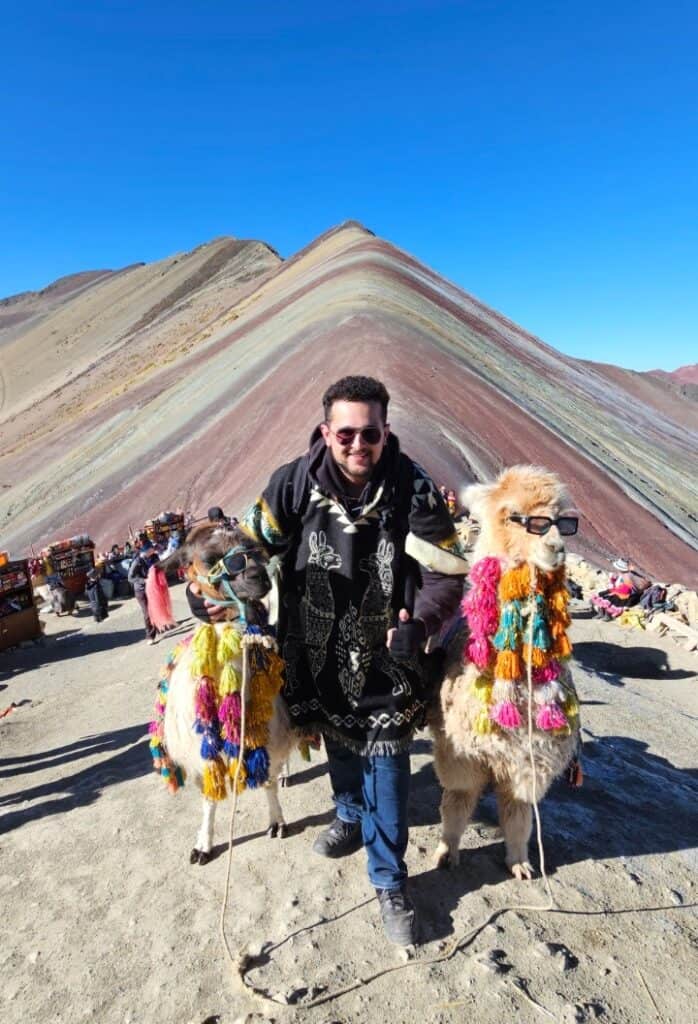
You can also pay for photos with llamas or alpacas near the viewpoint if you want one of the classic Rainbow Mountain pictures.
Cash is also useful for toilets, horse rentals, and small tips if needed. Most places do not accept cards, so bringing Peruvian soles is definitely the safest option.
Personally, I think around 200 soles is more than enough for the day, which is roughly €50 or around $55 USD. Unless you plan on renting a horse and buying a lot of extra things, you will probably spend much less than that.
Final Thoughts on Visiting Rainbow Mountain
Visiting Rainbow Mountain was one of the most rewarding experiences I had in Peru.
It was not an easy day, and there were moments during the hike where I had to stop often and really push myself to continue. But reaching the viewpoint made all the effort feel worth it.
What I liked most was that it felt like more than just a quick photo stop. From leaving Cusco before sunrise to walking through a remote part of the Andes and finally reaching the top, the whole day felt like a real adventure.
If you prepare properly, take your time, and do not underestimate the hike, I think Rainbow Mountain is absolutely worth adding to your Peru itinerary.
If you are planning a longer trip through the country, you can also read my 2 Week Peru Itinerary to see how Rainbow Mountain fits into a complete Peru route.